
Democracy is not a gift bestowed by institutions, but a practice built by citizens – Prof Prempeh
Ghana has been practicing multiparty democracy for more than 30 years now, but the country’s democratic institutions are still wavering, often going through twists and turns in phases. In may African countries, the hope, once held so high that models of Western style democracy would flourish, has crashed, leaving the democratic experiments on the continent in suspense.
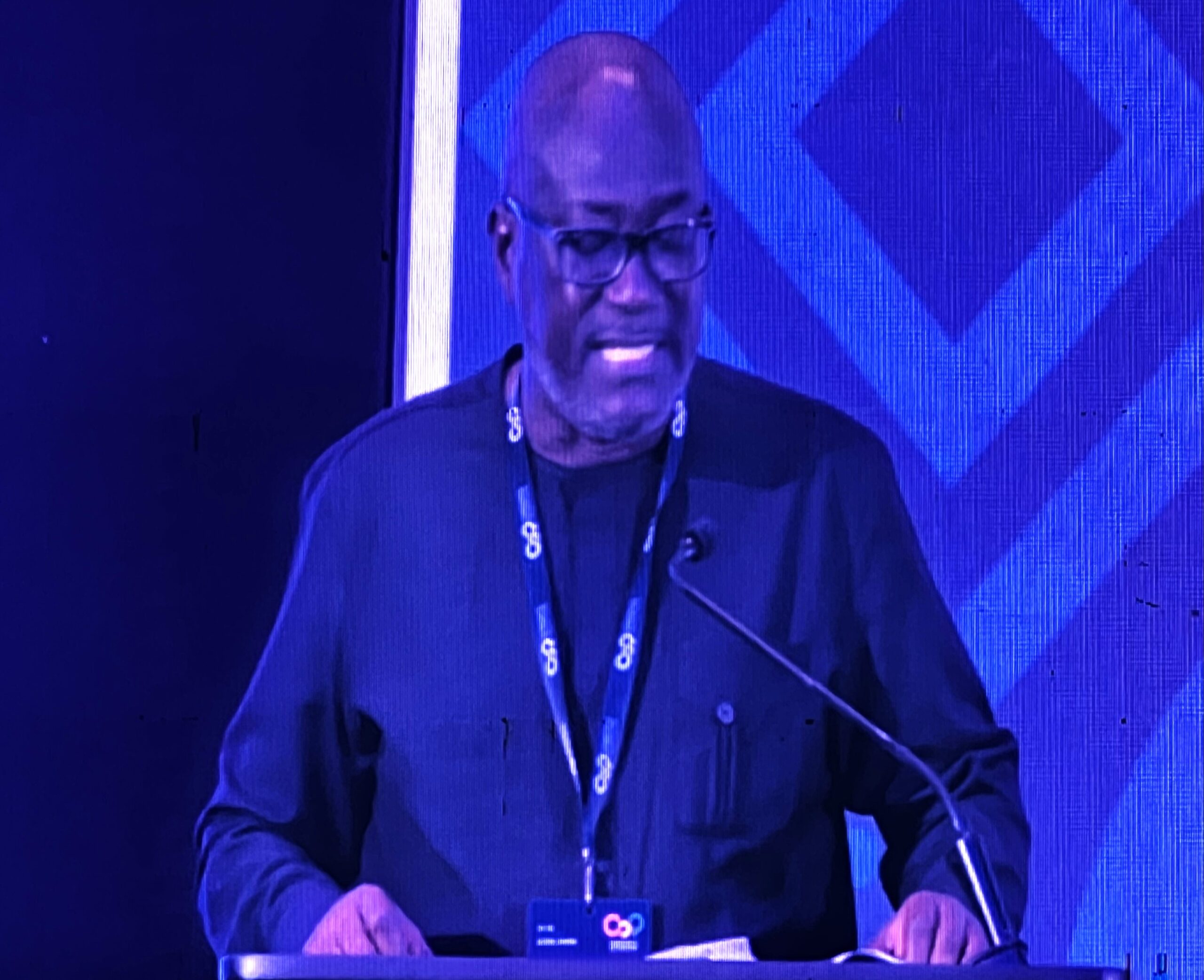
Speaking at the opening of the High-Level Regional Convening on the Financialization of Politics in Africa being held in Accra today, July 14, 2026, Prof Henry Kwasi Prempeh, the Executive Director of CDD-Ghana made the point that democracy is not a gift fully bestowed by institutions but a practice built by citizens who are genuinely empowered to participate in the decisions that shape their lives.
Tracing the inception of the CDD-Ghana, he said: “For more than two and a half decades, our mission to promote and deepen democracy, good governance and inclusive development, has driven the organisation to generate the research, analysis, and pursue advocacy to promote electoral integrity, fairness and fight political corruption.”
He said since 2004, CDD-Ghana has tracked closely the steadily growing concern of the intersection of money and political power.
“This is not a new concern for us. But it has become, over the course of our research, an urgent one. Let me put the matter in the context of numbers. In 2012, the estimated cost of winning a parliamentary seat in Ghana (primaries and general election) stood at GH¢124,000. By 2020, that same seat cost approximately GH¢4 million (approximately $350,000) which includes the cost of what is called ‘nurturing the constituency’. That is a 3,125 percent increase in eight years,” he said; adding, “This is the cost of seeking to represent the people in Parliament. The picture at the presidential level tells the same story.”
He noted that the average nomination and filing fees alone for presidential primaries have become, instead, machines for distributing resources to those who can deliver electoral outcomes and then recouping those resources once the state is within reach.
“This Convening is our collective response. It brings together, at this scale and at this level of leadership, government officials, the researchers, practitioners, civil society advocates, electoral bodies, and institutional authorities who have been working, often in parallel and often in isolation, on the many dimensions of this shared challenge,” he said.
According to Prof Prempeh, the African Union Advisory Board Against Corruption, the Open Society Foundations, Transparency International, and the Community of Practice on Political Finance in Africa are not merely partners in organising the event, they are co-architects of a reform agenda whose time has come.
He indicated that in December 2025, the international community adopted UNCAC Resolution 11/7, a dedicated multilateral commitment to transparency in the funding of political parties and electoral campaigns.
“Ghana was proud to co-table that resolution alongside Norway, Mongolia, and Albania, and 66 countries stood with us. The AUABC is now developing a continental Model Law to give that commitment institutional force. And the Community of Practice assembled in this room was built precisely to sustain this work beyond any single event or declaration,” he said.
In his remarks, the Speaker of Parliament, Alban Bagbin said it was time to move from talk to action. “We have been around these workshops and talk shops for a long time. It is time to act,” he said.
Mr Bagbin without mincing words said, “In politics you don’t account for your financing, because you can’t disclose the source. Politics itself is not a dirty game, it is the people who are playing it that are dirty,” he stated.
Explaining the dynamics of political party financing he said Ghana has 275 Constituencies, and the parties need four-wheel drives for their campaign teams. “This is just for movement,” he said. He also added that political candidates have to visit local chiefs. But in Ghanaian culture, “you can’t visit a chief empty handed,” he said.
Mr Bagbin cited the example of a former MP who died after falling ill, because his family members were unable to pay for his medical treatment. “The took him home, where he died,” he said.
The Speaker urged change, saying “when trust is eroded, democratic integrity is weakened. Let’s seize the opportunity to reform,” he said.
The Convening scheduled for July 14 to 16, 2026 is under theme “Advancing reform, transparency, accountability and democratic integrity”.
By Emmanuel K Dogbevi