
Ghana’s budget transparency score falls sharply
 Ghana’s budget transparency has recorded a sharp decline, dropping from a score of 46 in 2023 to 22 in 2025, according to the latest Open Budget Survey (OBS) report.
This significant fall has raised concerns about the country’s commitment to accountability, openness, and effective public financial management.
The OBS, which is globally recognised as an independent and fact-based assessment tool, evaluates countries based on three key areas: budget transparency, public participation, and oversight.
In the 2025 report, Ghana scored an overall 25 out of 100, far below the internationally accepted benchmark of 61, indicating serious weaknesses in the availability of budget information and citizen engagement.
The decline in Ghana’s transparency score has been largely attributed to the Government’s failure to publish key budget documents on time and to provide sufficiently detailed information in those that were released.
Under international standards, governments are expected to publish eight essential budget documents, but Ghana published only five during the assessment period.
These included the pre-budget statement, enacted budget, mid-year review, year-end report, and the audit report.
However, critical documents such as the Executive Budget Proposal, the Citizens Budget, and in-year reports were either not published within the required timeframe or were not accessible to the public.
This lack of timely and comprehensive information significantly limits citizens’ ability to understand, assess, and monitor government spending.
In addition to delays in publication, the report highlighted that only two out of the available budget documents met the required standards of comprehensiveness.
“This means that even when information is published, it may not be detailed or clear enough to allow effective public scrutiny,” the report said.
“The absence of complete and accessible data weakens accountability and increases the risk of mismanagement of public resources.” “Transparency is a key element in ensuring that government decisions are subject to public review, and its decline can erode trust between citizens and the state.”
Despite the fall in transparency, Ghana recorded a modest improvement in public participation, with its score rising from 22 in 2023 to 33 in 2025.
The progress had been attributed to increased consultations by the Ministry of Finance, greater involvement of parliamentary committees, and initiatives by the Ghana Audit Service to engage citizens in audit processes.
“These efforts have provided some opportunities for citizens and civil society organisations to contribute to discussions on public finance,” the report said.
However, the improvement remained insufficient, as the country still fell below global standards in this area.
A major gap identified in the report was the absence of formal mechanisms for citizen participation during the implementation stage of the budget, which denied citizens the opportunity to monitor how funds were actually spent after approval.
The oversight dimension of Ghana’s budget system also remains weak, with a composite score of 33. Within this, Parliament scored 28, reflecting limited effectiveness in scrutinising government financial activities, while the Ghana Audit Service scored 44, showing relatively better performance but still below acceptable levels.
The report pointed out that weak legislative scrutiny, delays in publishing parliamentary committee reports, and the absence of an independent fiscal institution continue to undermine effective oversight.
“Strong oversight institutions are essential for ensuring that government spending aligns with approved budgets and national priorities, and their weakness reduces accountability.”
Stakeholders have expressed concern over the findings and called for urgent reforms.
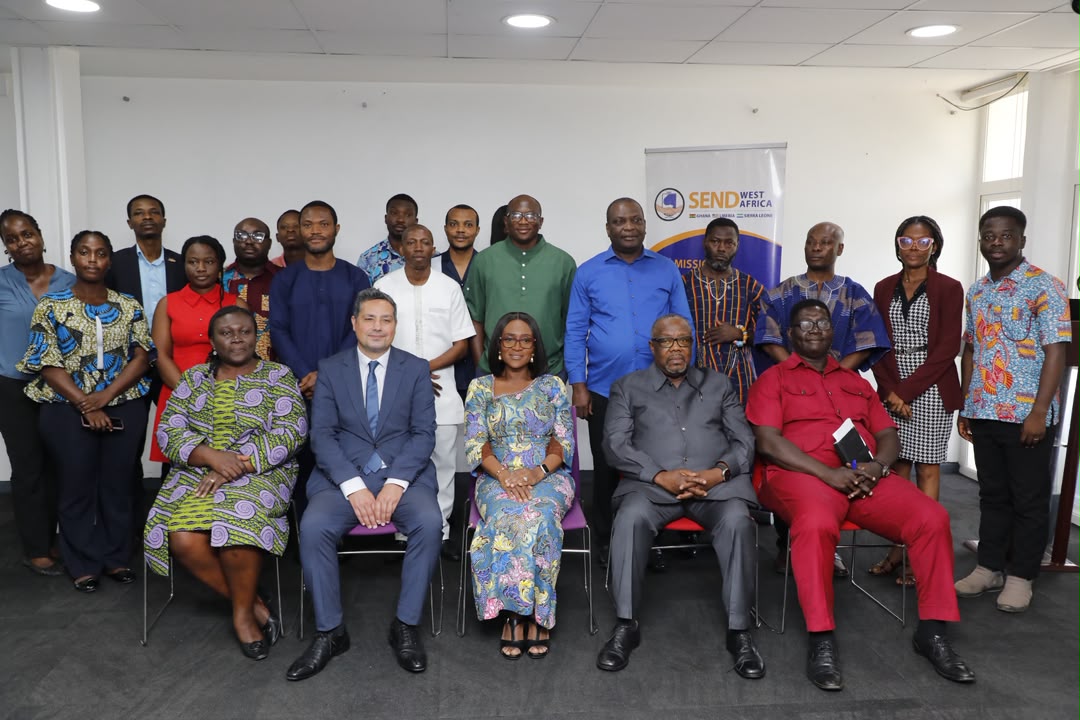
Mr Mohammed Tajudeen Abdulai of SEND Ghana emphasised that budget transparency was crucial to promoting accountability, trust, and effective service delivery.
He explained that when citizens had access to information and were given opportunities to participate in decision-making, it led to better governance outcomes.
Similarly, Madam Harriet Nuamah Agyemang, also of SEND Ghana, described the decline as alarming, noting that Ghana’s performance had steadily dropped from about 40 per cent in 2019 to 25 per cent in 2025.
She stressed the need for greater citizen involvement not only during budget planning but also during implementation and monitoring and called for improved access to information on public projects and spending at the community level.
In response, Madam Abena Osei-Asare, Chairperson of Parliament’s Public Accounts Committee, acknowledged the concerns raised but indicated that Ghana had made progress through reforms such as the Public Financial Management Act.
She argued that the OBS findings should serve as a tool to generate critical questions and guide necessary reforms rather than simply focusing on rankings.
She also called for stronger collaboration between Parliament and the Ministry of Finance to ensure timely publication of budget documents and to enhance public understanding of financial information.
On the international front, Mr Hooman Nouruzi of the British High Commission described the decline as a call to action and reaffirmed support for Ghana in strengthening public financial management systems, improving audit processes, and promoting civil society engagement.
Several recommendations have been proposed to address the challenges identified in the report. These include ensuring the timely publication of all required budget documents, strengthening parliamentary oversight, establishing an independent fiscal institution, and expanding citizen participation throughout the entire budget cycle.
There is also a strong emphasis on increasing public awareness and making financial information more accessible at both national and local levels.
The sharp decline in Ghana’s budget transparency score highlights significant challenges in governance, accountability, and public financial management.
Although some improvements have been made in participation and oversight, much remains to be done to meet international standards.
Enhancing transparency, strengthening institutions, and promoting active citizen engagement are critical steps towards restoring public trust, reducing corruption, and ensuring efficient use of public resources for sustainable economic development.
Source: GNA