
Sustainable financing, key to safeguarding Ghana’s primary healthcare gains – Experts
 Health financing experts, academics and policymakers have called for urgent and innovative domestic financing measures to sustain Ghana’s primary healthcare system as the country prepares to fully finance its immunisation programme by 2030.
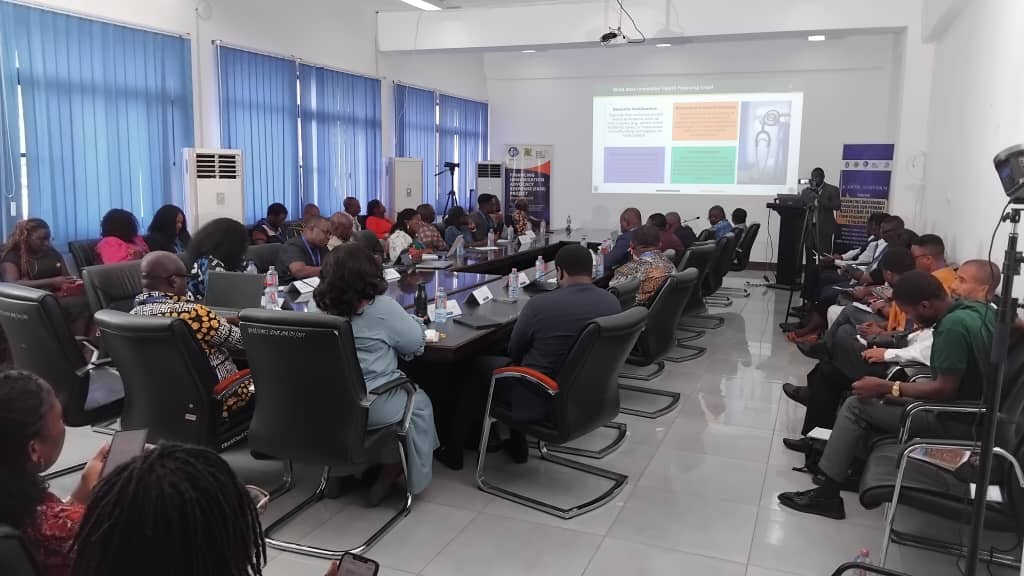
The call was made at an academic symposium organised by the Fred N. Binka School of Public Health (FNBSPH) of the University of Health and Allied Sciences (UHAS), in collaboration with Hope for Future Generations (HFFG) and the Global Health Advocacy Incubator (GHAI), in Ho on Friday.
The symposium, on the theme: “Advancing Sustainable Financing for Primary Health Care in Ghana: From Academic Research to Policymaking,” brought together academics, health practitioners, policymakers, development partners and civil society organisations to discuss sustainable financing options for primary healthcare and immunization programmes.
The meeting was held against the backdrop of Ghana’s transition under the Gavi, the Vaccine Alliance accelerated transition plan, which will require the country to fully finance its immunisation programme by January 2030.
Participants noted that the transition would require an estimated $168 million annually, yet only $266 million had been secured out of the $514 million required under recent immunisation financing plans.
They warned that declining donor support and delays in co-financing commitments could undermine the country’s public health gains.
Mrs. Cecilia Senoo, Executive Director and Founder of Hope for Future Generations, said Ghana’s achievements in child survival and disease prevention through the Expanded Programme on Immunisation were remarkable, but sustaining those gains would require increased domestic financing.
She said the country’s Multi-Year Immunisation Plan (2020-2024) estimated a financing requirement of $514 million, but only $266 million had been secured by the end of 2024.
She said a revised National Immunisation Strategy (2025-2029) was underway, but projections indicated that funding gaps would widen unless domestic financing was significantly increased.
Mrs. Senoo said HFFG, with support from GHAI, was advocating increased domestic resource mobilisation and stronger accountability, particularly to improve vaccine coverage among zero-dose children and support the introduction of new vaccines.
Prof. Martin Ayanore, the Dean of the Graduate School, UHAS, speaking on innovative financing mechanisms for primary healthcare service delivery, said Ghana must adopt a holistic approach that ensures health revenues are efficiently allocated to priority areas.
He said strategic purchasing remained critical in ensuring that “the right funding goes to the right spending areas” within the health sector.
Prof. Ayanore said stronger governance, transparency and accountability mechanisms were needed to address inefficiencies and revenue leakages.
“Health financing should remove barriers to healthcare access. If we develop financing mechanisms without addressing the underlying barriers, then we are not promoting equity and healthy living,” he said.
He called for stronger partnerships among government, academia, the private sector, development partners and philanthropic organisations to improve healthcare delivery.
The health financing expert said innovative financing extended beyond traditional resource mobilisation and should incorporate blended financing models that combine public, private and philanthropic resources.
He said innovative financing must support pharmaceutical supply chains, improve efficiency and strengthen service delivery.
Prof. Ayanore advocated progressive taxation measures, including taxes on alcohol and tobacco products, while cautioning against financing systems that disproportionately burden low-income populations.
“Any financing system must be progressive. Those with greater ability to pay should contribute more, while vulnerable groups must be protected,” he said.
He proposed a three-tier model for strengthening the National Health Insurance Scheme (NHIS).
Under the proposal, all Ghanaians would automatically be enrolled on NHIS and receive an essential package of primary healthcare services at no cost, while additional insurance packages would cater for other services, with government subsidies for vulnerable groups.
Specialised and chronic care services would be financed through supplementary insurance and co-payment arrangements, with state support for disadvantaged populations.
Prof. Justice Nonvignon, the Technical Director at Management Sciences for Health and Professor at the University of Ghana, called for urgent measures to strengthen domestic financing for immunisation and primary healthcare.
He said immunisation remains one of the most cost-effective public health interventions globally.
According to him, the World Health Organisation estimates that more than 100 million infant lives have been saved since the launch of the Expanded Programme on Immunisation in 1974.
He said studies had shown that every $1 invested in immunisation generated between $19.8 and $52.2 in economic benefits.
Prof. Nonvignon said Ghana, currently in Gavi’s accelerated transition phase, could not afford to delay preparations for full vaccine financing responsibility by 2030.
He proposed integrating immunisation financing into the government’s Free Primary Healthcare programme to ensure sustainability.
He also urged government to increase domestic resource mobilisation, leverage political support for local vaccine manufacturing and translate commitments to health sovereignty into tangible investments.
“We cannot implement Free Primary Healthcare for the entire population without bringing in new money,” he said.
Prof. Gilbert Abiiro, Vice Dean of the School of Public Health at the University for Development Studies (UDS), said innovative financing for universal health coverage should focus on three pillars: revenue mobilisation, risk pooling and strategic purchasing.
He said innovation was not necessarily about introducing entirely new systems but adapting existing approaches to make them more effective, efficient and sustainable.
Prof Abiiro proposed innovative financing options such as airline ticket levies, health bonds, social impact bonds, earmarked taxes, digital payment systems and blended financing models.
He said Ghana could also explore expanding salary-based contributions, improving digital payment platforms and strengthening integration among existing financing schemes.
He stressed that successful health financing reforms required both technical expertise and political commitment.
“Health financing innovation is about building a sustainable, efficient, equitable and integrated system that combines effective revenue mobilisation, strong risk pooling and strategic purchasing of health services,” he said.
The symposium also featured a panel discussion during which participants asked questions and made recommendations on strengthening sustainable financing for primary healthcare and immunisation.
Participants called for increased domestic resource mobilisation, reduced dependence on donor support, greater private sector participation, improved accountability and stronger collaboration between academia and policymakers to build a resilient and sustainable healthcare system.
Source: GNA