
Nurses demand better conditions, leadership opportunities, and infrastructure
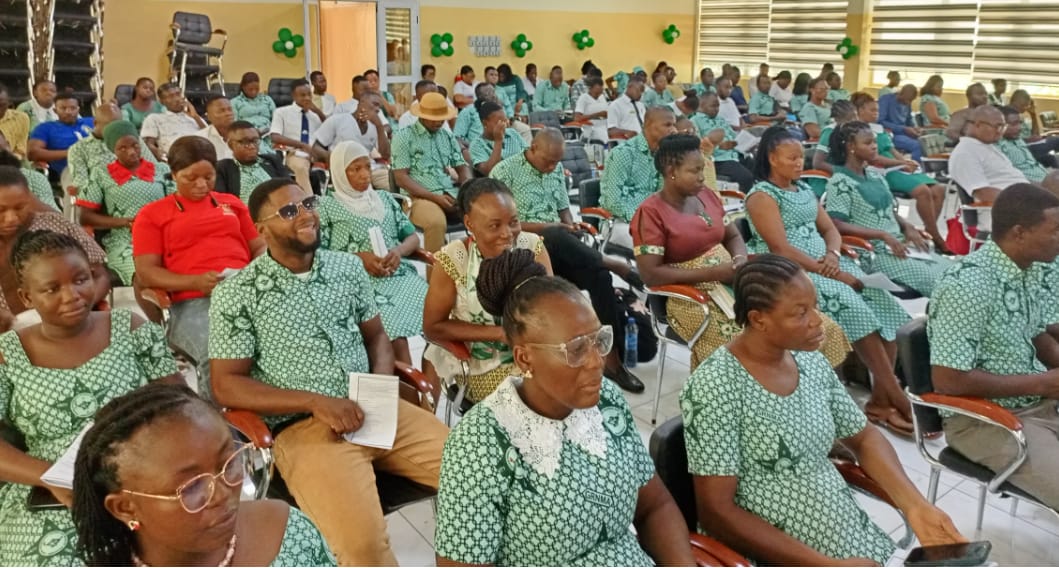 Nurses and midwives in the Upper East Region are calling for improved infrastructure, fair remuneration, specialized training, and greater representation in health policy decisions to enhance the delivery of quality healthcare services.
The concerns were highlighted at a regional gathering held to commemorate International Nurses Day under the theme: “Our Nurses, Our Future: Empowered Nurses Save Lives.”
Delivering the keynote address, Dr. Michael Wombeogo, Dean of the Faculty of Health and Allied Sciences at Regentropfen University College, Kansoe Namoo in the Bongo District, described nurses and midwives as the backbone of Ghana’s healthcare system and stressed the need to address persistent challenges affecting healthcare delivery in the region.
“This is a call that signifies readiness, a cry for support, a mandate to perform, and a reflection of the reality of the Ghanaian nurse,” he said.
Dr. Wombeogo noted that despite recent postings of nurses and midwives, the Upper East Region continued to face a significant shortage of healthcare personnel, creating gaps in maternal, newborn, and child healthcare services.
He emphasized the need for modern maternity wards, reliable electricity, clean water systems, and improved sanitation facilities to enhance healthcare outcomes.
“Improved infrastructure, fair remuneration and incentives, specialized training, leadership opportunities, and safe working conditions are what nurses and midwives in the Upper East Region want,” he stated.
The keynote speaker highlighted the challenges faced by nurses working in conflict-prone and underserved communities such as Bawku and Nalerigu, where health workers contend with heavy workloads, burnout, and security concerns.
He commended nurses and midwives for their resilience and dedication, describing them as trusted professionals who continue to provide essential healthcare services despite difficult conditions.
“Nurses are often the first point of contact in rural communities, wielding social power through proximity and trust,” Dr. Wombeogo said.
He also called for deliberate efforts to promote more women into leadership positions within the health sector, noting that although women constitute the majority of the nursing workforce, they remain underrepresented in decision-making roles.
Dr. Wombeogo further urged government and stakeholders to expand specialized training in areas such as postpartum haemorrhage management, pregnancy-induced hypertension, and neonatal care to help reduce maternal and infant mortality.
The Dean, who is also the Executive Director of the Participatory Action for Rural Development Alternatives (PARDA), a non-governmental organization, called for greater public appreciation of nurses and midwives and underscored their role in national development.
“When nurses are empowered, lives are saved, communities are strengthened, and futures are secured,” he said.
In a speech read on his behalf, Dr. Braimah Baba Abubakari, Upper East Regional Director of the Ghana Health Service (GHS), urged nurses to renew their commitment to professional development, empathy, and clinical excellence in response to rising public expectations.
He stressed that true empowerment within the nursing profession is rooted in continuous learning, self-improvement, and strict adherence to professional ethics.
According to him, the call for greater dedication comes at a critical time, as the expansion of free healthcare services across the country continues to raise public expectations of healthcare professionals.
“In an era of free and expanded healthcare, the public’s expectations of us will be higher than ever,” Dr. Abubakari stated.
Source: GNA