
The need to provide better health outcomes for the urban poor
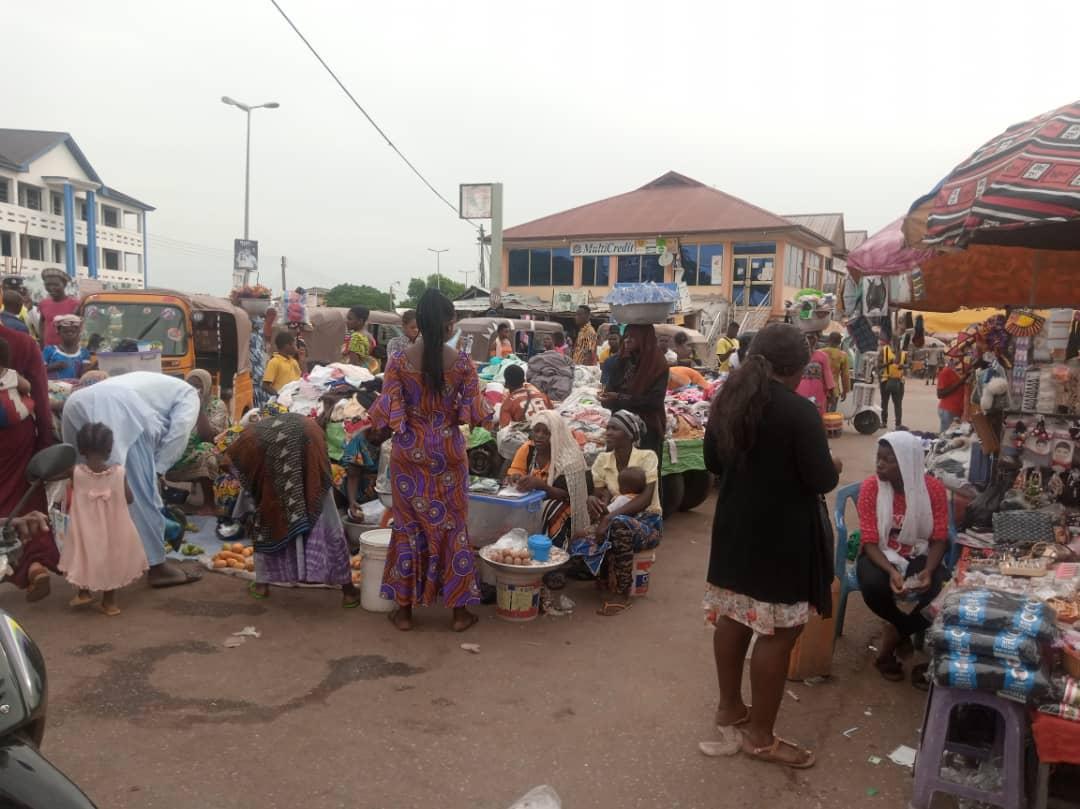
A middle-aged mentally challenged woman regularly sits under the unroofed metal pavilion close to the GCB Bank located along the highway in Kasoa in the Central region.
This empty space serves as a parking lot for vehicles but it also provides shelter for this woman, who looks unkempt and dirty in her ragged apparel. She is very visible to everyone passing by because she sometimes raves and rants in agitation.
At certain times of the week, she relocates to the central business district under the overhead bridge. This is where she sits on the pavement to sell her neatly arranged toffees and chewing gum placed in an improvised tray.
This area is notorious for its heavy human and vehicular traffic and street hawking. It is one of the busiest places in Kasoa, a sprawling urban town, grappling with unregulated commercial activities and heaps of rubbish dumped along certain portions of the streets, waiting for collection.
In this congested urban setting, it is difficult to tell who this mentally challenged woman is, where she lives and more importantly the extent or nature of her mental illness.
How is she able to sell in such a mental state? Is it to take care of bread and butter issues?
A bread seller, who sells at the same spot, in response to a series of questions, told Ghana Business News that indeed, this woman is mentally challenged but she is able to serve her customers and equally able to give the correct change to them.
Open spaces, overhead bridges including bus terminals in congested urban areas, often serve as places for people from all walks of life.
They use such places to meet basic needs such as sleeping or resting and to carry out economic activities for survival in big cities or towns.
For instance, beneath the overhead bridge at the Kwame Nkrumah Circle in the Greater Accra region is one such sanctuary.
This area is close to big lorry stations and bus terminals such as the Neoplan and VIP stations with people arriving in or departing from Accra from all the 16 regions. At this place is a picture of what poor urban dwellers face in their desperate search to meet basic needs.
This densely populated area has its fair share of beggars, mentally challenged people, drug addicts, petty thieves and hawkers, among others, congregating under the anonymity provided by urban life to fight turf wars over sleeping, resting or selling spaces.
It is a scene where one can easily see the demarcation of sleeping places beneath the bridge with personnel items or beddings spread on the bare floor where disadvantaged and vulnerable people including criminals pass the night, rest during the day or engage in petty trading and hawking, notwithstanding the exposure to the vagaries of the weather, mosquitoes and all kinds of dangers.
This hazardous way of survival has serious health implications for these poor urban dwellers.
According to the World Health Organisation (WHO), urbanization is one of the leading global trends of the 21st century that has a significant impact on health.
It says over 55% of the world’s population live in urban areas – a proportion that is expected to increase to 68% by 2050.
It also adds that because most future urban growth would take place in developing countries, the world today has a unique opportunity to guide urbanization and other major urban development trends in a way that protects and promotes health.
It is for this reason why the health of the urban poor ought to matter in the scheme of things. This demands the strengthening of the urban health systems at the most basic levels.
It also calls for the re-training of health care providers with greater focus on preventing diseases and promoting good health practices among urban populations across Ghana, in the face of increasing cases of both infectious and non-communicable diseases (NCDs).
The WHO says social determinants of health – broadly defined as the conditions in which people are born, grow, live, work and age, and people’s access to power, money and resources – have a powerful influence on health inequities.
This is because people who have limited access to quality housing, education, social protection and job opportunities have a higher risk of illness and death.
Therefore, addressing the social determinants of health equity is fundamental for improving health and requires action by government, the private sector and civil society.
A recent study carried out in some urban areas in the Greater Accra region has shown that health care providers, specifically some community health officers (CHOs), have limited knowledge on emerging urban-specific health issues such as NCDs, mental health and reproductive health.
It also emerged during the research that there are gaps in the provision of preventive and promotive healthcare at the Community-based Health Planning and Services (CHPS) level.
Findings from the study were made known at a meeting in Accra organized by the Community-led Responsive and Effective Urban Health (CHORUS) project in collaboration with Women, Media, and Change.
The project, funded by UK Aid, is being implemented in Ghana and other countries. It seeks to improve and strengthen urban health systems by linking communities, local government and health workers to support life cycle health promotion and preventive policies, among other activities.
It also seeks to determine the effects of an intervention it is carrying out to improve the knowledge of CHOs in sexual and reproductive health services, mental health, NCDs and infectious disease management in Ghana.
The project is also focusing on preventive and promotive health care through strengthening services at the basic level through the urban CHPS systems, by delivering health programmes at the household and community level in urban neighbourhoods in the Ashaiman, La-Nkwantanang Madina, Ayawaso West and Ayawaso East Municipalities.
As part of these activities, in 2024 and part of this year, the project trained about 328 community health officers and nurses with facilitators from the Ghana Health Service and the School of Public Health of the University of Ghana.
Work was also carried out among community health volunteers, community health committee members and vulnerable groups such as Kayayei (head porters) and substance users.
The CHOs are being empowered to deliver life-cycle health promotion and preventive services, including helping them to undertake public education, so that basic health care is made accessible to the vulnerable right from the cradle to the grave.
Health experts have said that many diseases such as NCDs and mental health conditions, which affect all people including poor urban dwellers, can be effectively treated at relatively low cost, yet health systems remain significantly under-resourced and treatment gaps are wide.
Fortunately, issues around NCDs and mental health and what can further be done to control them would take centre stage at the global level, sometime this year.
On September 25, 2025, heads of state and governments would meet at the UN General Assembly to set a new vision for the prevention and control of NCDs and the promotion of mental health and wellbeing towards 2030 and beyond through a new, ambitious and achievable political declaration.
The WHO, in a statement issued in New York, says the Fourth UN High-level meeting on NCDs “marks a unique, decennial opportunity to adopt a new, ambitious and achievable political declaration on NCDs and mental health conditions towards 2030 and beyond.”
It says halfway to 2030, progress towards achieving SDG target and reducing premature mortality from NCDs by one third through “prevention and treatment and the promotion of mental health and well-being are off track.”.
“Underinvestment in health services has created a significant equity gap in care and support for people affected by NCDs and mental health conditions. Unless urgent action is taken, the health of individuals, households and societies will be significantly affected in the long term,” it notes.
The statement says the global NCD burden and the urgency of promoting mental health and well-being are no longer just a health system problem.
It is calling on member states of the UN and other global partners to renew and reinforce their commitment to addressing NCDs and mental health challenges.
This, the statement says, can be done “through stronger whole-of-government and whole-of society collaboration, and by reshaping health systems, supporting sustainable financing mechanisms, and tackling the underlying social, economic, commercial and environmental drivers of risk and inequities.”
Ahead of the September meeting, the WHO is urging countries, nongovernmental organizations, UN agencies, citizens and people living with a health condition to join forces, take action and support local and global efforts to accelerate an “inclusive, equitable and quality NCD and mental health response.”
By Eunice Menka
Copyright ©2025 by Creative Imaginations Publicity
All rights reserved. This article or any portion thereof may not be reproduced or used in any manner whatsoever without the express written permission of the publisher except for the use of brief quotations in reviews.