
Wontumi’s 20-year sentence
…a test of Ghana’s rule of law—not just a verdict for one man
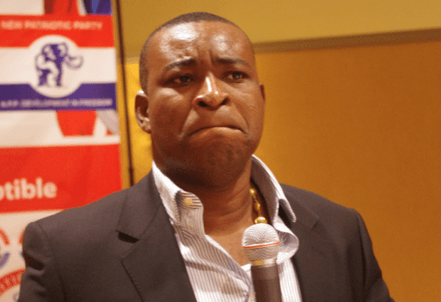
Ghana’s public life does not pause for court calendars; it runs on belief—on whether citizens think institutions can be trusted, whether power can be restrained, and whether the law is applied with the same firmness to the powerful as it is to the ordinary. In that context, the sentencing of Bernard Antwi-Boasiako, generally identified as Chairman Wontumi, to 20 years’ imprisonment in hard labour for offences connected to illegal mining in the Tano-Nimiri Forest Reserve in the Western Region, is more than a courtroom outcome. It is a national mirror; one that reflects, tests, and potentially strengthens the credibility of Ghana’s governance system.
To followers of Chairman Wontumi, and for that matter, members of the New Patriotic Party, the judgement will certainly be framed as political persecution or judicial overreach. To opponents, it will be celebrated as long-overdue accountability for a figure whose name has been linked, directly and indirectly to some of the most destructive patterns of illegality in the mining sector. Yet, as an editorial matter, the most important question is not whether one side is angrier than the other. The most important question is whether this verdict advances the principle that defines the modern state: no individual is above the law.
That principle matters because of what illegal mining represents in Ghana: environmental destruction, public health risks, loss of livelihoods for those who play by the rules, and the erosion of trust in governance. The illegal mining economy thrives where enforcement is inconsistent, where intimidation displaces compliance, and where political influence can blur accountability. When courts act decisively, especially against individuals with considerable political reach, citizens gain a reason to believe that institutions are not merely symbols, but actual mechanisms of restraint.
For politicians, this is not simply a warning. It is a leadership instruction. Political leadership in a democracy is not immunity dressed in suits; it is service backed by obligation. Leaders are expected to understand that the state is not built on rhetoric alone, but on enforceable norms. When politicians treat law as negotiable, they weaken the state and empower the criminal networks that thrive in their wake. Chairman Wontumi’s sentencing therefore offers a stark lesson: positions of influence do not abolish legal responsibility. If the evidence meets the threshold and the law is applied, the verdict does not care who you are, but only what you did.
Chief Executive Officer of the Ghana Chamber of Mines, Dr Kenneth Ashigbey, who has welcomed the sentencing, said it will serve as a deterrent to others involved in the practice. “I’m happy that this case has gone its full circle. I would have wished that the learned judge would have given 25 years plus the maximum fine, but 20 years is good enough. Yes, it’s punitive enough, but not enough,” he said.
Dr Ashigbey, who has been a strong advocate in the fight against illegal mining, expressed the hope that other individuals involved in illegal mining would also face similar penalties, including maximum prison terms and fines. He therefore urged the Mahama administration to ensure that all persons found culpable in illegal mining activities are treated equally under the law.
Of course, the credibility of justice does not rest on outcomes alone. It rests on perceptions of fairness, procedural correctness, and transparency. Already, some observers have questioned the trial’s process or argued that the prosecution reflected broader political tensions rather than an exclusively legal calculus. Such claims, even when made sincerely, should not be dismissed with contempt, because institutions survive on legitimacy, and legitimacy is sustained by public confidence that cases are not manufactured. If there are credible concerns about procedure, due process must be addressed through the appropriate legal channels. Ghana’s strength is that it still has a judiciary where remedies can be sought, appeals filed, and questions answered under law.
But there is a danger too: when political actors and media ecosystems treat every adverse outcome as “selective justice” by default, the public can begin to treat courts as just another political battlefield. That is how cynicism grows. That is how people start to believe that truth is determined by party affiliation rather than evidence. And once that belief takes root, even correct judgements become harder to defend, not because the facts are wrong, but because the social trust needed to accept the judgement is weakened.
There is another dimension that politicians must understand: justice delayed and justice doubted can still produce justice fulfilled. This case reportedly moved through a long period, and that time itself is a reminder that the judicial system requires patience, respect, and room to operate without interference. Politicians may compete for power, but they must not compete with courts. The judiciary’s independence is not a slogan; it is a constitutional safeguard that protects everyone, including political opponents. If courts can be pressured when outcomes are inconvenient, then democracy becomes performative, tolerating elections while undermining the rule that makes elections meaningful.
What, then, should politicians do with this moment? Firstly, they should recognize that enforcement cannot be selective, because selective enforcement is merely another form of corruption. Secondly, they should stop treating illegality as an inconvenience that strong men can manage. If illegal mining can reach the courts and end in a substantial custodial sentence, then political actors should take that as proof that the law is capable of reaching deep into society, and not just into low-level operators.
Thirdly, leaders should prioritize reforms that reduce opportunities for impunity: stronger compliance mechanisms, credible monitoring, environmental enforcement that is not compromised, and judicial and investigative systems that are resourced enough to carry cases to completion. Sentencing is not prevention. It is the consequence of prevention failing. If Ghana wants fewer repeat cases, it must build the conditions where illegality becomes harder, more expensive, and less profitable by closing loopholes and strengthening enforcement capacity across the chain, from operators to enablers.
Finally, citizens should also be cautious about how they respond. The court has spoken. Those who disagree should do so through law, and not through threats, intimidation, or violence. Ghana’s democratic maturity is measured not by how loud people celebrate victories or condemn defeats, but by whether they accept that the court’s process is the legitimate path to contesting outcomes.
Chairman Wontumi’s sentencing is therefore a political watershed, and not because it ends a debate, but because it should force everyone into a sharper moral clarity. Accountability is not a weapon used only against opponents; it is a national standard that must apply to all. If Ghana truly wants rule of law to mean something, then this verdict must be treated not merely as a spectacle, but as a precedent in spirit: that power can be punished, that legality matters, and that the future cannot be built on the assumption that influential people will always find a way out.
By Innocent Samuel Appiah