
Technology can eliminate uncertainty in waste collection – AfriNova
 Technology has the potential to eliminate uncertainty in waste collection and improve sanitation service delivery across Ghana, Mr Alex Kwame Donyinah, Managing Partner-Operations of AfriNova Waste Solutions Limited, said.
He said many households, businesses and institutions continued to face challenges in accessing reliable waste collection services, often relying on chance encounters with tricycle operators to dispose of refuse.
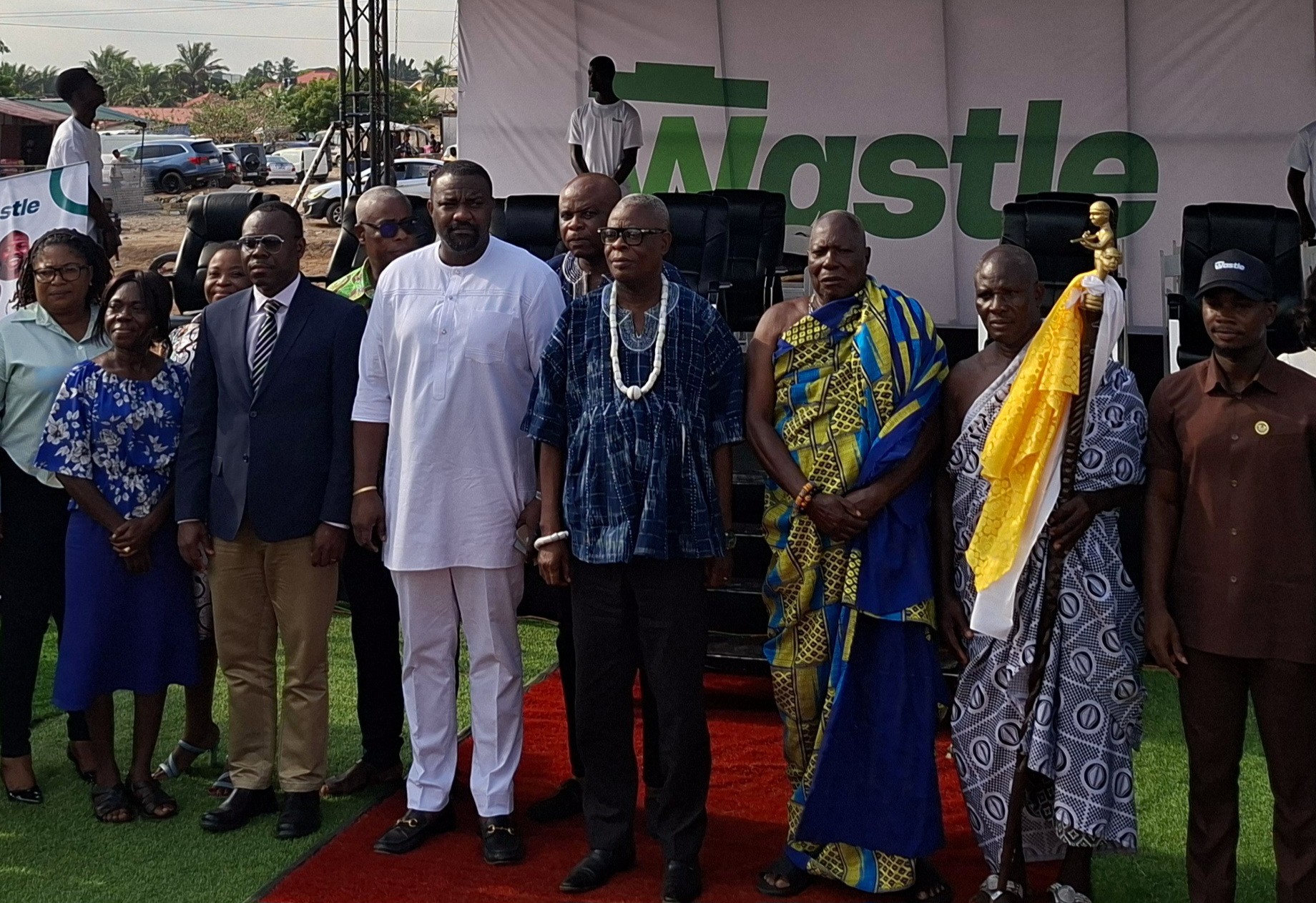
Mr Donyinah made the observation at the launch of Wastle, an online waste management platform, in Accra.
The event brought together representatives from the Ministry of Health, municipal health authorities, the education sector and other stakeholders to discuss the role of technology and partnerships in addressing sanitation challenges.
Ghana continues to face sanitation challenges, with irregular waste collection, indiscriminate dumping and rising urban waste volumes affecting public health and the environment.
Stakeholders increasingly advocate technology-driven solutions to improve efficiency, accountability and access to waste management services nationwide.
With the Wastle platform coming on board, it would connect households, businesses and institutions with waste collectors, enabling users to request services and track collections, Mr Donyinah said.
The idea for the Wastle platform, he said, emerged from observations made within local communities, where residents, including children, were frequently seen waiting by roadsides in an attempt to attract the attention of passing waste collectors.
“What began as a simple observation led us to ask why families, businesses and institutions should depend on uncertainty to access a basic sanitation service?” he asked.
Mr Donyinah noted that despite advances in smartphone technology, digital payment systems, Global Positioning Systems (GPS) and artificial intelligence, waste collection services in many communities remained largely informal and unpredictable.
He said technology could be leveraged to enable residents to request services, track collections, improve accountability and generate data to support planning and decision-making within the sanitation sector.
The Managing Partner said the issue of waste management extended beyond household inconvenience and constituted a national development challenge with significant economic implications.
He referenced estimates by the Institute of Statistical, Social and Economic Research (ISSER), which indicate that poor sanitation imposes substantial costs on the country through healthcare expenditure, environmental degradation and lost productivity.
Mr Donyinah said achieving the country’s sanitation goals would require innovation, collaboration and reforms in service delivery systems.
He stressed the need to view waste management not only as an environmental necessity but also as an area that could support employment creation, innovation and sustainable development.
Mr John Setor Dumelo, the Deputy Minister of Food and Agriculture, commended Wastle for conceiving such innovation to address Ghana’s waste problems.
He urged the company to leverage its platform to minimise the gap between waste and recycling potentials.
Source: GNA