
Africa pension assets exceed $3 trillion as intra-Africa trade reaches $220b
Economic growth in Africa is expected to reach approximately four percent in 2026 with intra-African trade increasing more than 12 percent in 2025, pension assets on the continent now exceed $3 trillion.
Intra-Africa trade was valued at $220 billion.
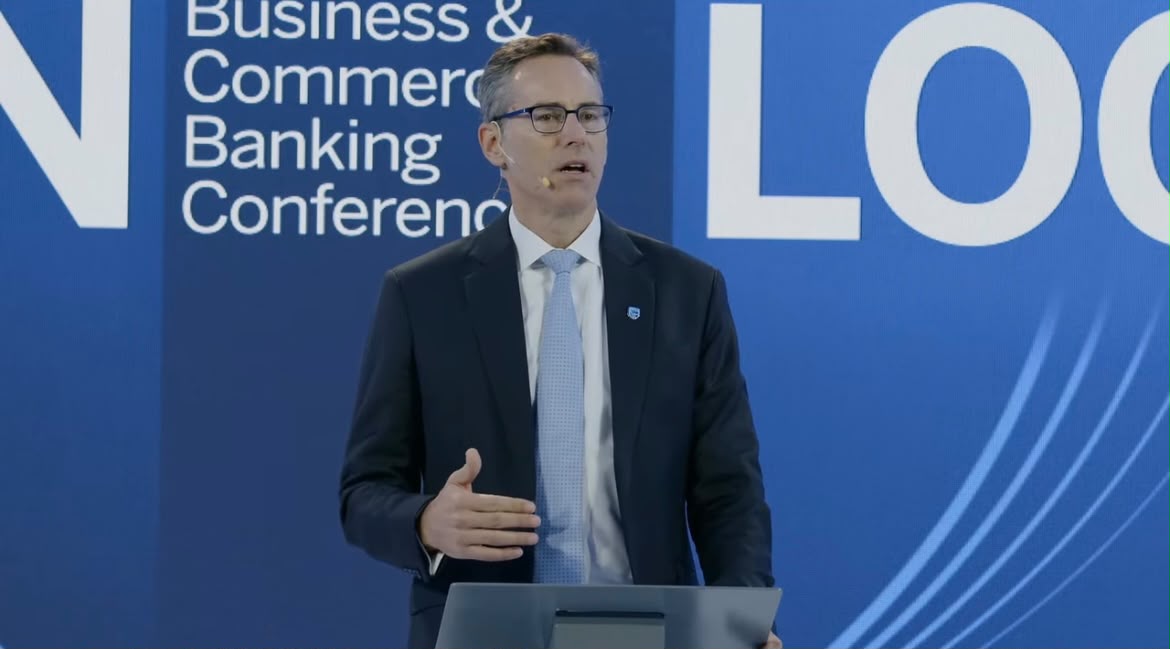
Speaking Thursday July 9, 2026, at the opening of the third edition of the Africa Unlocked Conference in Cape Town, South Africa, Bill Blackie, Chief Executive Business and Commercial Banking of Standard Bank expressed optimism over the conference, and while at it, he noted that the global context in which the conference was being held remains complex. He cited US tariffs being at their highest levels over a century, conflict in the Middle East which continues to disrupt energy flows and shipping routes, and the multilateral trading system being under strain in ways that have not been seen in a generation.
“But the data point I return to most often is this: today, Business Banking clients trade more with each other across this continent than with any single external partner—more than with China, the United States or the European Union. Their most important trade partner is each other. That shift matters. It reflects something structural rather than cyclical,” he said.
Citing the African Trade Report, Blackie said intra-African trade reached approximately $220 billion last year.
“47 countries are now part of the African Continental Free Trade Area, the largest free trade area by number of participants anywhere in the world. Added to that, the continent’s infrastructure pipeline has never been deeper, and its energy transition ambitions have never been more commercially grounded,” he said.
Black then paid tribute to some African businesses.
“Earlier this year, I visited East Africa and met one of our clients, Coast Cables. Founded in 1978 as a manufacturer of super‑enameled copper cables, it has since developed into a large‑scale producer of domestic and industrial power cables, supplying across the region and now expanding into solar energy.
But what stayed with me was not only the business itself. It was the conviction behind it. Through economic cycles, currency volatility and infrastructure constraints, they kept building,” he said.
“An East African business, built in East Africa, now enabling East Africa’s future. This is not an outlier. It is representative of what we see every day—businesses building quietly and persistently, without fanfare, and increasingly at scale,” he stated.
He also gave the example of Adrian Basson from Hungry Lion who two years ago at the Africa Unlocked Conference spoke about an ambition to open 100 stores a year across Africa.
“Today, that ambition has turned into lived reality. Hungry Lion has already opened more than 500 stores across nine countries, employing 10,000 people, and is now on track to open 250 stores this year — which would take them to 750 stores by year‑end. It is a clear example of what determined execution looks like when an African business is built for African consumers and decides to scale at pace on this continent,” he said.
Sharing the story of a recent visit by Standard Bank regional Chief Executive for West Africa, Helmut Engelbrecht to the Dangote Petroleum Refinery in Lagos, he said: “By all accounts it is a world class facility. Projects of that scale are never just a single business; they are ecosystems of hundreds of suppliers, contractors and logistics operators.”
He noted that in Business Banking, the belief is that growth is amplified in business ecosystems.
“When we understand the networks around a client and support them across relationships, platforms and structures, we help value move across borders, sectors and stages of growth. That is what allows us to stay with a client through their whole journey — from the first working‑capital facility to cross‑border expansion and access to global pools of capital,” he said.
He said the Bank’s team in Nigeria has supported 300 businesses in the Dangote value chain with the solutions needed to deliver and sustain the operations of that world‑class facility.
“It is a practical example of how ecosystem capability changes what is possible for our clients, and for the economies we serve,” he said.
According to Blackie, international trade remains one of the most powerful engines of Africa’s economic prosperity, as African businesses are renegotiating the terms of their engagement with China, India and the Gulf—moving from raw material exporters to value-added partners.
“Our partnership with Industrial and Commercial Bank of China, now in its eighteenth year, gives clients something more valuable than a corridor between Africa and China; it gives them practical access. They can open Renminbi accounts, settle more efficiently with Chinese suppliers, and reduce friction in how they trade. Over the past three years, BCB has facilitated Renminbi transactions worth RMB1.9 billion for clients doing business with China,” he said.
However, he noted that what matters, though, is not only the currency mechanism itself.
“It is what that access makes possible. Over the same period, our Africa–China import solution helped 720 clients bring world-class machinery and equipment into Africa, with a combined value of 1.3 billion rand, while our export solution helped 380 clients export directly to the Chinese market through multi-year contracts worth a combined 4 billion rand,” he said.
Blackie believes that is how trade becomes more meaningful: not simply as flow, but as capability. It is what allows a client such as Sumseron Coffee in Kenya to move beyond ambition and into execution—supplying organically grown coffee into China.
“Kenyan coffee, grown in Africa, roasted in Africa, now being served in one of the world’s largest consumer markets in the world,” he said.
Acknowledging energy and infrastructure as the foundation on which everything else is built, he said Africa holds approximately 60% of the world’s best solar resources and the critical minerals needed to drive the global energy transition. “That endowment is beginning to translate into industrial advantage,” he said.
The Africa Unlocked Conference 2026 is under the theme: “Built in Africa: Amplifying continental growth.”
By Emmanuel K Dogbevi, in Cape Town, South Africa