
Ghana rejects South Africa request for Ramaphosa state visit over xenophobia
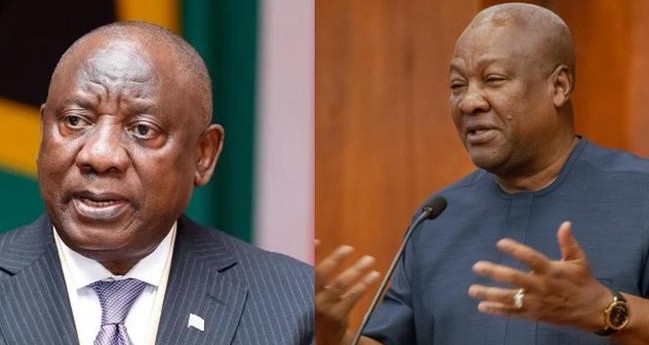 As diplomatic relations between Ghana and South Africa continue to take different twists and turns following growing xenophobia and Afrophobia in the latter, the Ghana government has sternly rejected a request for a state visit by South African president Cyril Ramaphosa.
Ghana Business News can report authoritatively that the visit scheduled for August 2 to 4 has been rejected by Ghana, and without mincing words the Ghanaian authorities have cited the xenophobic and Afrophobic attacks in South Africa which also resulted in the killing of a Ghanaian national, 40-year-old Bashiru Isak in Cape Town’s Khayelitsha township. Ghana has registered its formal protest to the South African government over the killing.
But in response, the South African authorities have denied that the killing of Isak was related to the anti-immigrant crisis, dismissing Ghana’s claim as “factually incorrect” and “not based on fact.”
South African authorities said they suspected the killing could have been “extortion-related.” And South Africa police have told the French news agency AFP, that a 35-year-old Ghanaian with a different name from that given by Ghana’s government was shot at a barbershop on a Monday, not a Tuesday as claimed by the Ghanaian authorities.
But Ghana’s Foreign Ministry, said it was standing by its statement.
Government sources have told Ghana Business News that the killing of Isak was also cited as a reason for the rejection.
Yesterday July 6, 2026, the University of Ghana issued a travel advisory warning its staff and students not to travel to South Africa over anti-immigrant attacks.
Ghana and South Africa have had excellent diplomatic relations over a very long time. Ghana did not only house and educated South African anti-apartheid activists, the country supported international activities to end apartheid. The current location housing Ghana’s Ministry of Foreign Affairs used to be an international hostel that housed foreign students, including South African freedom fighters in exile, such as Alfred Hutchinson who died in 1972.
In 1958 when Hutchinson, a leader in the ANC during the 1950s, a writer and schoolteacher was acquitted on a treason charge, seeking to elude prosecution, he fled to Ghana which had just become independent a year earlier. He was one of 156 defendants arrested and tried for high treason in 1956.
When Peter Molotsi of the South African Pan-Africanist Congress was reminiscing about his arrival in Ghana in 1960, he exclaimed, “We have arrived home, the Mecca of Pan-Africanism.”
The Ghanaian Bureau of African Affairs (BAA) established by Kwame Nkrumah gave institutional support to Africa’s anti-colonial community, including South Africa.
Available literature indicates that as the international community intensified its opposition to apartheid between 1958 and 1961, South African activists and exiles were some of the most prominent groups of expatriates in what was known as the Accra Freedom Fighter community.
South Africa’s High Commissioner designate to Ghana, Linda Shongwe appointed in February, was expected to have presented her letters of credence to President John Mahama on June 16, 2026. She was expected to be part of eight ambassadors presenting their letters, but only seven did, she was excluded. A source familiar with the matter tells Ghana Business News that her credence was not accepted at that time.
The Ghana government has since voluntarily repatriated about 926 of its citizens from South Africa in May and June this year following the intensification of the anti-immigrant activities. Some 900 citizens have been screened and are awaiting further repatriation.
By Emmanuel K Dogbevi