
FoN report on lithium exploration reveals right violations of farmers
A five‑year research report tracking the impacts of lithium exploration by the Atlantic Lithium Company in-charge of the Ewoyaa Lithium mining Project in Ghana had found gross violations of farmers’ rights.
The abuses include failure by the Company to pay due compensation to some farmers whose farmlands were invaded without prior notice and crops destroyed in Mfantseman Municipality and Abura-Asebu-Kwamankese District of the Central Region.
The study, carried out by Friends of the Nation (FoN), a socio‑environmental advocacy group, said community grievances and right infringements were widespread, particularly between 2017 and 2019, during the initial geological works.
The report also mentioned inadequate compensation to some farmers and unresolved exploration‑phase emotional and phycological impact on farmers as having caused dire socio‑economic consequences for predominantly farming households.
The study was compiled by FoN in partnership with Oxfam, a global confederation of 21 independent Non-Governmental Organisations working in over 70 countries to fight inequality and poverty.
The report documented both setbacks and limited gains experienced by affected communities amid delays in parliamentary ratification of the lithium mining agreement.
For half a decade, FoN had worked with residents in communities affected by lithium explorations through community meetings, public education and sustained advocacy aimed at securing fair compensation, resettlement processes and environmental safeguards.
Particularly, FoN had engaged the Community Negotiation Committees (CNC), made up of stakeholder representatives responsible for negating compensation, and Community Resettlement Committee members responsible for negotiating resettlement negotiations, Assembly and department staff, Assembly members, opinion leaders and the media.
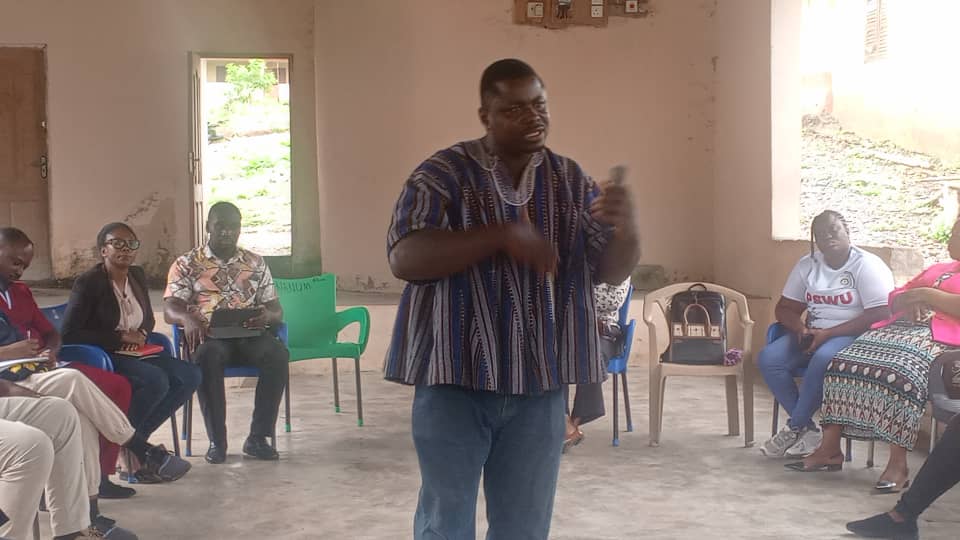
Mr Solomon Kusi Ampofo, Natural Resource Governance Coordinator at FoN, revealed the findings at separate validation and feedback workshops held at Afrangua and Saltpond on lithium exploration in Central Region.
The report found out that Lithium Atlantic excluded naturally occurring trees from compensation because they were not planted by landowners, even though many families depended on charcoal trade with those trees and had been forced to sell such trees at GH¢1,000 per acre to support their households.
It said these omissions violated Legislative Instrument (LI) 2175 (2021), which required compensation for crops and loss of expected income, taking into account crop type, life expectancy and loss of earnings or sustenance from customary tenancy and for disturbances from mineral rights, including loss of surface use and changes in land use after mine closure.
The report added that regulation (3)(1)(b) of LI 2175 (2021) mandated that evidence of families selling naturally occurring trees to charcoal producers be included in compensation calculations, a provision reportedly ignored in negotiations, with testimonies from landowners in Krampakrom cited as examples.
Mr Ampofo expressed confidence in the negotiation committees between the communities and the company, but lamented the substantial power imbalances and the vilification, intimidation and marginalisation of certain members for expressing dissenting views.
Buttressing that, he raised concerns about low women’s participation in the negotiation committees constituting less than 10 percent and wondered removal of a female representative after a healthy disagreements in a committee’s meeting.
“I was expressing my opinion on how fair the compensation being discussed should be. My Chief didn’t like the approach I used. After that meeting, I wasn’t invited to the meetings again,” Mr Ampofo quoted remarks by the dismissed female committee member from Krampakrom.
Notwithstanding, Mr Ampofo highly praised Atlantic Lithium Company for waiting patiently for parliamentary ratification of the lithium mining agreement before commencing mining activities.
He also commended the company for having engaged in meetings organised by civil society and for granting FoN observer access to some committee meetings, which had improved community understanding of mining.
The company’s huge investments in Corporate Social Responsibility (CSR) in water, infrastructure, schools and social initiatives were praised for having contributed to local wellbeing.
Going forward, Mr Ampofo recommended protections for dissent, and better representation thresholds for women and the youth.
Reacting to the report, an official with the company told the Ghana News Agency that the it did not infringe on stakeholders’ rights, including those of farmers and landowners.
The source added that landowners whose farms were entered during exploration were notified through traditional authorities.
The company affirmed its commitment to community welfare and said it will continue engagement and CSR activities to sustain cordial relationships with local communities.
Source: GNA