
We remembered June 3, but the victims are forgotten

Only yesterday we remembered. Some of us, remembered the June 3 disaster at the Kwame Nkrumah Circle. The tragic twin calamity of flooding and a fuel station explosion struck the country at the heart of the capital Accra at the Kwame Nkrumah Circle in 2015, killing more than 150 people.
The country was shocked. Africa was stunned. And the world was aghast. Because of the reputation Ghana seems to have built over the years as the African country with the right things going on for her.
I remember there was a Wok Inn restaurant close to the fuel station where I regularly bought Chinese food.
The memories, images, and emotions of that day, seeing those cars caught up in traffic with people who minutes before, were hoping to crawl slowly home, but never made it, as they were incinerated while seated in their cars are still hauntingly vivid.
That incident extensively and totally altered the landscape, community and social networks of that area. Never to be the same again.
That painful incident was devastating enough to have stirred up our consciousness as a country, towards public safety and social accountability. We should have developed an executable blueprint for public health and safety, disaster management and emergency response strategies and infrastructure.
That single incident should have drastically influenced the theory and practice of public safety and emergency medicine in Ghana. The data is still poignantly available and accessible. It provided us a master class opportunity to make a case for a stronger, more efficient, functional public safety and disaster management system. A flawless continuous mechanism that is national in character.
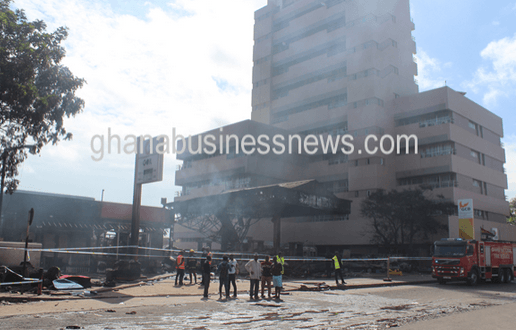 That horrendous incident stretched and tested our humanity and drained our milk of human kindness – howbeit, momentarily. The victims who survived the ferocious inferno and roaring floods, were briefly showcased and the few lucky ones given some handouts, but were suddenly forgotten, abandoned and left to fend for themselves. Some plunged into emotional instability, penury, and permanent disability, with no hope of recovery, left to slide to the bottom of the barrel – no matter where they stood before the dreadfully painful incident.
But sadly, as a nation and people we didn’t learn anything from that tragedy.
Before that double tragedy, we had had the May 9 Stadium disaster in 2001. We later had the Atomic Junction gas explosion tragedy.
In spite of the morbid impacts of these conflagrations, we just move on.
We have not stopped to think and to consciously develop real disaster prevention techniques or strategies from those experiences.
We have just continued to live, just they way we have before the disasters struck. There is no publicly known effort to ensure those strategies never happen again, and if they did happen, there is no indication that we are ready to manage them.
Every year June 3 comes we remember the harrowing incident. But the victims, dead and surviving, are forgotten. Perhaps, only remembered by their families and friends, while the survivors, deeply scarred, are either struggling to make sense of life, or are a burden to their struggling families or friends.
By Emmanuel K Dogbevi