
No conference rooms, no PowerPoint: How one journalist’s training model is rewiring reporting in Ghana
When journalism training in Ghana became increasingly dependent on donors, many early-career reporters were learning more about proposal writing than verification. Workshops arrived with polished slides, promised “capacity building,” and then—after the funding cycle ended—newsrooms quietly returned to the same old habits: stories built on hearsay, weak editorial checks, and ethics treated as a slogan rather than a practice.
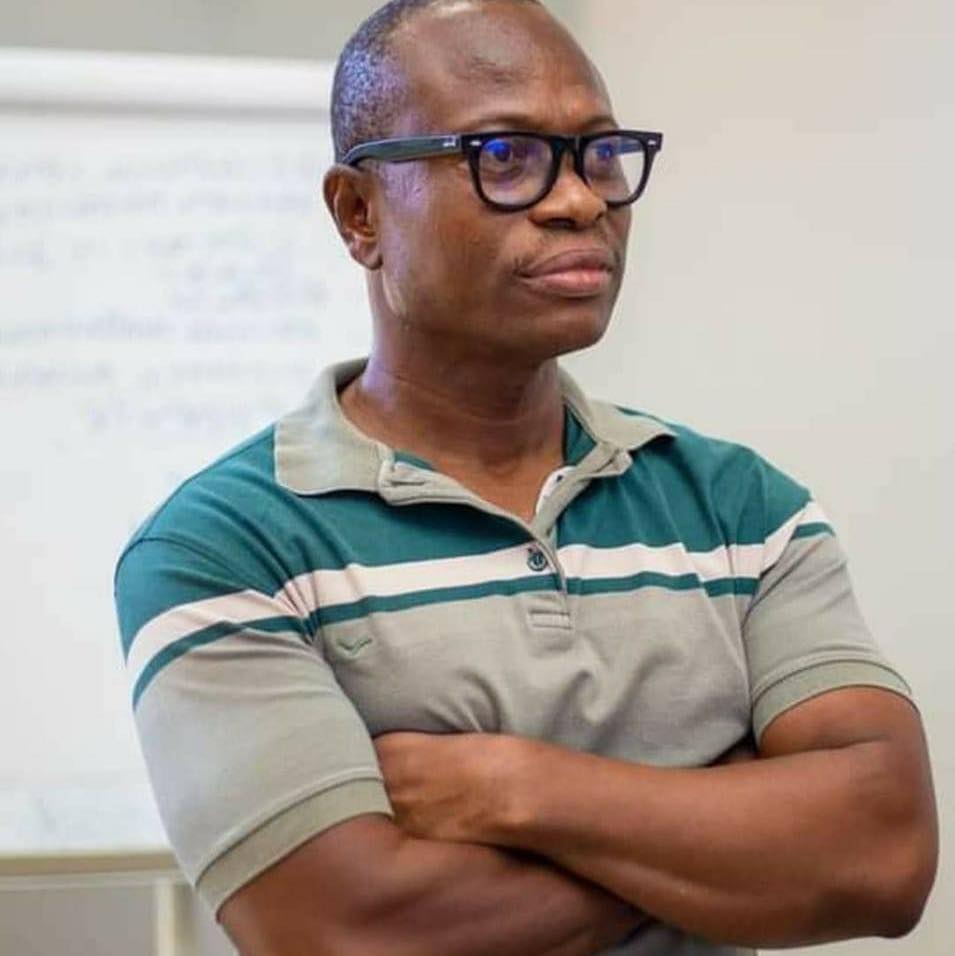
In 2019, investigative journalist, Emmanuel K. Dogbevi decided he would not wait for that system to change. Instead of building another donor-dependent training platform, he initiated a drastically informal approach: The Journalism Hangout—free, conversational sessions held in everyday public spaces where journalists already gather. No conference rooms. No PowerPoint. No per diems. Just practicing journalists and trainees, sitting with notebooks, discussing real reporting problems the way reporters actually work—through debate, critique, and shared experience.
Now, as donor funding continues to shrink across much of Africa, Mr. Dogbevi’s model is emerging as a practical blueprint: journalism training sustained not by grants, but by commitment, peer learning, and the steady insistence on professional standards.
A journalist known for digging—and for teaching
Mr. Dogbevi, who is the Managing Editor of Ghana Business News (GBN), an online platform, is not new to accountability reporting. Over 35 years in the field, he has worked across stories ranging from corruption to environmental destruction, developing a reputation for journalism that does not merely expose wrongdoing, but drives consequences.
His 2020 investigation into Ghana’s illegal rosewood trade exposed weak enforcement and political complicity, contributing to international scrutiny and helping trigger a ban on rosewood exports from Ghana. He has also contributed to major cross-border investigations, including West Africa Leaks, a collaboration led by the International Consortium of Investigative Journalists (ICIJ) involving journalists from 11 countries. Working through massive leaked records—such as Offshore Leaks, Swiss Leaks, Panama Papers, and Paradise Papers—Mr. Dogbevi, also the Vice President of The African Editors Forum (TAEF), helped in bringing the opaque world of offshore finance into public view in West Africa.

But even as his reporting gained international attention, he was watching a quieter crisis unfold inside Ghanaian newsrooms: young journalists arriving without mentorship, editors too stretched to provide structured guidance, and training becoming something journalists attended rather than something that transformed their practice. “Even when workshops happened, many did not transfer skills,” Mr. Dogbevi lamented.
The moment donor-funded training started to fail
For years, Mr. Dogbevi ran formal, grant-backed journalism workshops through his non-profit, NewsBridge Africa. He described a turning point that many media professionals in Ghana will recognize: proposal cycles that dragged on, promised support that did not materialize, and funding becoming increasingly unreliable.
By 2018, the environment changed. Newsrooms continued to hire young reporters, but training pipelines faltered. Many of these new journalists were being “thrown” into reporting desks with limited orientation, no continuous learning, and few editorial structures to correct errors before they hit publication.
Meanwhile, misinformation pressures grew. Digital content accelerated. Deepfakes and misleading narratives became easier to spread. In that climate, journalists needed training that was not theoretical—but practical, fast, and connected to real newsroom routines.
The TAEF Veep saw the gap clearly: what journalists needed was not another event, but a continuing method of improvement, and this birthed The Journalism Hangout: training where journalists live – the solution was both simple and daring.

In 2019, Mr. Dogbevi launched The Journalism Hangout with a straightforward invitation. He posted on Facebook and Twitter that he would be hosting a journalism session in an informal setting—meet, sit over drinks, and talk about journalism.
The first gathering was small: four journalists showed up—two sports reporters, an investigative journalist who later worked as a fact-checker, and a fresh journalism graduate still trying to understand how professional practice differs from classroom learning.
The GBN Managing Editor remembers noticing something important: even in casual conversation, participants pulled out notepads and started taking notes. For him, it was proof the approach worked—because people were treating it as something they could apply, not entertainment to fill a weekend.
By the third session, numbers increased, where people started coming with their own questions, bringing experiences that sparked deeper discussion. A participant suggested expanding to communications and PR students, so Dogbevi changed the location—moving from a more limited space into a restaurant with enough room. Then the model began to travel with Journalists outside Accra—across Ghana—started calling to ask when he (Dogbevi) would visit their cities.
How he expanded without money for travel
According to Mr. Dogbevi, one of the most striking features of his model is not just what he teaches but rather how he makes it happen. Even though he did not have the funds to travel to every region himself, journalists helped him bridge the gap in ways that reflected the community spirit he was trying to build.
He noted that in one instance, one journalist saw that Mr. Dogbevi was travelling to Kumasi and messaged him: Do you need a ticket? And he confirmed he did, and the journalist arranged it for him. Another person donated money because they believed in the quality of journalism and in Mr. Dogbevi’s ability to improve it.

Occasionally, Mr. Dogbevi combined hangouts with personal travel—attending a friend’s wedding in another city and announcing a session. In those moments, journalists who had waited for years to learn from someone with long professional experience arrived with energy and urgency.
Mr. Dogbevi opined that his most intense trip involved three cities in one week across Ghana’s Northern, Upper East, and North East regions. He travelled on Monday, held a hangout, slept, drove to another city for an evening session, drove onward, slept again, held another session, and then returned to Accra, stressing that even though it was demanding, it was also a living demonstration of something he often emphasizes: journalism improvement cannot be postponed indefinitely.
What makes the model different from standard training?
Mr. Dogbevi’s approach challenges the conventional logic of journalism training. He does not run sessions like seminars. There are no PowerPoint presentations. There are no handouts. There is no podium lecture that positions trainees as passive recipients. Instead, the hangout is structured like an extended peer conversation—more intimate, more interactive. “We meet in social places rather than conference rooms,” he explains. “Everybody buys their own drink. Sometimes a journalist volunteers water. That’s it.”
The discussions cover core investigative journalism competencies: how to pitch stories, ethics, accuracy, verification, and collaboration. Occasionally, he uses specific stories as case studies—not to show off professional work, but to demonstrate how journalism could have been done differently, what crucial pieces were missing, and how to prevent similar errors next time.
Participants interrupt with questions, share personal experiences triggered by what they hear, and take notes as if they are in a rehearsal room for the craft. For Mr. Dogbevi, this is where the learning becomes real: he offers practical methodology, not textbook theory. Journalism, he argues, is “practical.” A good training model must therefore look and feel like professional journalism—investigations shaped by judgment, not just knowledge.
A typical hangout: cheap, focused, and built around real problems
In practice, Mr. Dogbevi selects a venue and date, then mobilizes journalists to attend. The goal is a quiet restaurant or drinking spot with no rental costs and the session becomes a space where journalists can ask hard questions and receive direct professional framing. He discusses investigative reporting skills, how to strengthen story structures, and how to interrogate claims instead of repeating them.
Sometimes he analyses stories as case studies, encouraging participants to identify what should have been verified, which ethical lines might have been crossed, and how collaboration could improve investigation quality—especially in environments where resources are dwindling and misinformation is accelerating.
The GBN Managing Editor similarly breaks down his own costs when travelling: transport and accommodation outside Accra, such as return air tickets, vehicle hiring for road trips, hotel nights, and food. The transparency reinforces the model’s ethic: this is training built with real sacrifice—not with budget lines and donor expectations.
Sustainability: “The beauty of this model…”
One reason The Journalism Hangout stands out is that it refuses to pretend sustainability is guaranteed by external funding. Mr. Dogbevi pays for the platform largely from personal resources and modest income. He does not have sponsors. He does not monetize his website. He sometimes does freelance and uses those earnings to support training. At times, he is paid per diem to attend international conferences, and he reinvests those funds into the hangouts. It is, by his own description, “very sacrificial.”

Yet, the rewards are immediate and visible. He says he gains satisfaction from the faces of journalists who otherwise would not have access to structured learning from someone still active in the field. Some trainees tell him they realize they are not doing good journalism—and that after listening, they intend to do better. The model’s most powerful statement comes from Mr. Dogbevi himself: “The beauty of this model is that dwindling donor funding won’t affect it.”
Because the sessions are free and do not depend on grants, the training does not collapse when donor timelines end. It survives because it is sustained by community commitment and a journalist’s insistence that standards must remain.
The measurable impact: better collaboration, better verification, better newsroom attitudes
Mr. Dogbevi is careful about defining “impact.” He does not claim each hangout produces a single headline outcome. Instead, the aim is to improve performance in specific newsroom roles and improve journalistic attitudes overall. He recalls one vivid example: after discussing collaboration, a journalist—who had absorbed the value of working with others rather than competing—collaborated with another radio station in another city on a corruption story for the first time in his life.
For the TAEF Veep, that moment was a turning point. It showed learning could change how journalists approach investigations and not only what they report. He likewise notes that journalists often come away with a refreshed understanding of journalism’s core responsibility: quiz political claims, analyze statements, verify facts, and avoid hearsay reporting. Even basic journalism principles—often neglected when young reporters are placed in newsrooms without training but become clearer through the hangout format.
The learning may not be instant, but the effects show up in behaviour. Journalists become more aware of quality standards and more motivated to apply for fellowships, seek grants, and pursue continuing professional development.
Community-led initiatives and press freedom: why the hangout matters beyond training
Beyond skills, Mr. Dogbevi sees the hangout as a community mechanism. The model encourages networking. It helps journalists meet others in their region who they may never have connected with despite living nearby. These alliances become more than social relationships—they become a form of professional support, including an informal “layer of defense” for journalists who take on difficult stories.
It also reinforces courage. When journalists hear from a practitioner who has sustained accountability reporting over decades, they receive not only instruction but permission to be bold, careful, and ethical. Mr. Dogbevi argues that journalism can only thrive when press freedom exists. The hangout, by building solidarity and ethical awareness, strengthens the profession’s internal capacity to protect integrity—even under political pressure.
A model the rest of Africa could adapt

Mr. Dogbevi believes the approach is easily transferable. Anyone can host a hangout. The structure is inexpensive. The conversation can begin with a simple message: “Today we’re not talking football—we’re talking journalism.” Community members can share best practices from different contexts, adopt what works, and continue improving locally.
He even received calls from outside Ghana. A friend in Tanzania asked how to run the model and whether it could be replicated. Mr. Dogbevi indicated he would consider running hangouts during trips abroad and helping other journalists establish similar sessions in their own countries.
What’s next: free sessions, possible paid master classes, and expansion beyond Accra
Looking ahead, Mr. Dogbevi remains open to evolution but cautious about compromise. He has thought about corporate sponsorship and paying participants for special master classes. But he emphasizes that free sessions should continue—especially for people who cannot afford training or who live outside city centres where opportunities are limited. He has received messages from journalists who tell him, essentially: You haven’t come to my region yet.With more support, he says, that should no longer be a question.
For now, the priority remains the same: keep the sessions running, keep them free, and keep them grounded in the real work of journalists who produce stories that hold power accountable.
A new kind of journalism training—and a belief in continuity
The Ghana media ecosystem does not lack people who want to learn. What it lacks—too often—is mentorship that is continuous, practical, and delivered by people still doing the work.
Dogbevi’s Journalism Hangout meets that gap with an approach that feels almost rebellious in its simplicity: turn professional conversation into education, turn public spaces into classrooms, and turn the act of reporting into a shared discipline.
In a time when institutional training can become fragile—dependent on external funding cycles—Mr. Dogbevi’s model offers something more stable: an idea that journalism improves because people keep showing up for each other, keep asking better questions, and keep insisting that truth must be verified, not merely published.
As donor money dwindles, the hangout becomes a reminder that standards do not have to wait for funding. They only need believers. And in Ghana, those believers are now multiplying—one informal session at a time.
By Innocent Samuel Appiah