
Experts call for investment in wastewater surveillance for disease control
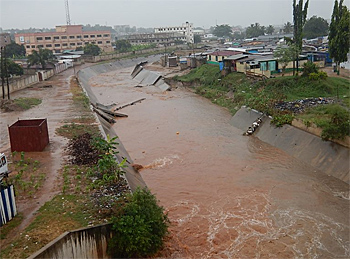 Scientists and public health experts from 31 countries have called for increased investment in wastewater and environmental surveillance to strengthen disease detection and response systems.
The call was made at the Wastewater and Environmental Surveillance (WES) Conference 2026 held in Accra under the theme “Harnessing Wastewater and Environmental Surveillance – A One Health and Disease Control Tool.”
Dr Kate Medlicott, World Health Organisation Technical Lead on Sanitation and Wastewater, speaking at the conference, said wastewater surveillance could provide critical trend data even where clinical reporting was limited.
She called for stronger multi-sector collaboration and adaptation of surveillance systems to local contexts.
The conference brought together 178 in-person participants and more than 400 virtual participants daily from Africa, Europe, Asia and the Americas.
Participants said wastewater and environmental surveillance offered a cost-effective, non-invasive early-warning system for detecting infectious diseases, including emerging pathogens.
They noted that the system could complement clinical surveillance, improve outbreak preparedness, and support timely public health responses.
Dr Samuel Kaba Akoriyea, Director-General of the Ghana Health Service, said Ghana remained committed to integrating wastewater surveillance into national disease control systems.
He said the approach had supported polio eradication efforts and could be expanded to address other public health threats.
Participants expressed concern over heavy reliance on donor funding for such surveillance systems in many low- and middle-income countries.
They called for increased domestic financing, capacity building, and stronger policy integration.
The conference recommended the adoption of wastewater and environmental surveillance as part of the One Health approach, integration into national surveillance systems, and investment in research to guide policy decisions.
It also called for sustainable financing mechanisms and strengthened laboratory and technical capacity.
Prof. Ellis Owusu-Dabo, a public health expert and Chair of the conference, called for the development of scalable and sustainable systems to strengthen global health security.
Organisers expressed appreciation to partner institutions, including the Kwame Nkrumah University of Science and Technology, Ghana Health Service, World Health Organisation, University of Ghana, Noguchi Memorial Institute for Medical Research, Environmental Protection Authority, Scripps Research, the Ministry of Health and the Gates Foundation.
Source: GNA