
Ghana’s cocoa gamble: Why paying farmers double Ivory Coast’s price may be smart economics
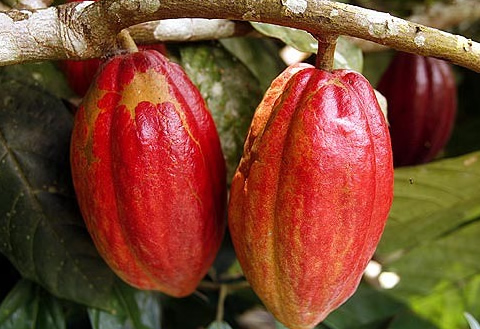 As global markets collapse, Ghana maintains the world’s most farmer-friendly cocoa policy. But the real story isn’t about politics—it’s about survival.
The mathematics is unforgiving. Ghana pays cocoa farmers GH¢2,587 per 64-kilogram bag. Ivory Coast, the world’s largest cocoa producer and Ghana’s closest competitor, now pays GH¢1,216—less than half. Yet in the dimly lit chambers of Parliament and across radio stations blanketing the nation, Ghana’s government stands accused of betraying the farmers it promised to champion. The accusation is seductive. It is also mathematically false.
What has unfolded in Ghana’s cocoa sector over the past eighteen months tells a different story than political theatre allows. It is a story about a government choosing competence over populism during a commodity crisis that has exposed the fragility of price guarantees disconnected from economic reality. It is a story about why keeping promises sometimes means rewriting the terms under which those promises were made. And it is a story about regional leadership—one nation managing crisis sustainably while its neighbour stumbles into an unsustainable subsidy trap.
Understanding this story requires looking past the cocoa pods carried into Parliament by opposition NPP MPs and examining instead the global forces that have reshaped the world cocoa market since late 2023.
When the bubble bursts
For a brief, intoxicating moment in early 2024, cocoa seemed to offer an escape from commodity curse economics. Prices touched $7,200 per metric tonne—nearly triple historical averages—driven by a convergence of supply shocks, climate failures in West Africa, and speculative buying that treated cocoa futures like a technology stock. Governments across the region, including Ghana, made commitments based on those inflated expectations. The then opposition National Democratic Congress (NDC), promised GH¢6,000 per bag to cocoa farmers. The mathematics seemed straightforward: 70 percent of the world market price.
At $7,200 per tonne, 70 percent of that figure—converted at 2023-2024 exchange rates—produced GH¢6,000 per bag. The promise felt achievable. It felt sustainable. It felt like finally, the farmers who had built West Africa’s wealth on their labour would share in the commodity’s upside. Then reality reasserted itself.
By early 2025, global cocoa prices had collapsed to around US$2,895 per metric tonne—a 60 percent decline that exposed the temporary nature of the peak. This correction was not unique to cocoa. It reflected a return to market fundamentals after speculative excess had inflated prices beyond what global supply and demand could sustain. For cocoa-producing nations accustomed to commodity volatility, it was a familiar rhythm. For governments that had built political commitments on peak-price mathematics, it became a crisis.
Ivory Coast faced this crisis first and responded with what seemed like farmer solidarity: it maintained elevated price guarantees even as global prices fell. Exporters, facing margin compression as the gap between world prices and guaranteed domestic prices widened, reduced buying from farmers. The market began to dysfunction. By mid-2025, Ivory Coast’s government acknowledged the unsustainability of its approach and began reducing guaranteed prices. The result was precisely what the government had tried to prevent—reduced farmer income during a period of global market stress. Ghana watched this unfold and made a different calculation.
The formula Ghana actually developed
The opposition’s betrayal narrative rests on a specific claim: the government promised GH¢6,000 per bag and is now paying GH¢2,587. That represents a 57 percent reduction from the promise. By this logic, the government has abandoned farmers in their moment of greatest need.
But this accounting ignores the mechanism through which the promise was made. The commitment was not a fixed number. It was a formula: 70 percent of the world market price, converted at applicable exchange rates. Fixed numbers fail during commodity cycles. Formulas, properly constructed, survive them.
Applying that formula to current market conditions reveals a calculation the opposition prefers not to examine. Seventy percent of $2,895.09 per metric tonne equals just about $2,026.56 per tonne, or $129.70 per 64-kilogram bag. Converted at the Bank of Ghana inter-bank mid-rate of GH¢10.6865 to the dollar, this produces GH¢1,386 per bag and yet, Ghana is currently paying GH¢2,587 per bag instead.
Therefore, the government is paying GH¢1,201 more per bag—86.65 percent above what the formula would prescribe under current global prices. In other words, Ghana is not merely honouring the formula, but exceeding it substantially while global markets remain depressed. This is not betrayal by formula. This is premium payments above formula during a crisis.
The arithmetic of sustainability
The real question is not whether Ghana is paying what it promised. It is whether what Ghana is paying is sustainable—both for farmers and for the Ghana Cocoa Board (COCOBOD), the state institution responsible for cocoa marketing and pricing.
COCOBOD operates within genuine constraints that political rhetoric rarely acknowledges. The organization carries debt obligations incurred when prices were higher, manages forward contracts signed at different price points, and maintains operational capacity including storage, quality control, and marketing infrastructure. These fixed costs do not disappear when global prices collapse.
If COCOBOD locked farm gate prices at the levels that seemed sustainable when cocoa traded at $7,200 per tonne, the mathematics would become catastrophic. The Board would face margin compression between its purchasing price and its resale price. Forward obligations made during the price peak would become losses. Liquidity would deteriorate. Eventually, the organization would face insolvency—and farmers would receive nothing.
This is not hypothetical. This is what happened to Ivory Coast’s system when the government maintained prices disconnected from market realities. Exporters, facing unsustainable losses, stopped buying. Farmers, suddenly unable to sell their product regardless of the guaranteed price, faced effective price collapse anyway. The government eventually had to inject massive subsidies to prevent complete system failure—an approach even Ivory Coast’s officials have acknowledged as unsustainable.
Ghana’s current price of GH¢2,587 represents a different calculation: one that sustains farmer income above what global markets would support while preserving COCOBOD’s capacity to maintain forward buying, execute its obligations, and remain operationally viable. It is the price that allows the system to function during crisis rather than the price that feels politically satisfying. This distinction matters because a collapsed COCOBOD serves no farmers at all.
Political theatre vs economic reality
In recent weeks, opposition MPs have processed through Parliament wearing cocoa sashes and carrying cocoa pods. Allegedly spontaneous farmer demonstrations have materialized, featuring participants who later acknowledged they were not cocoa farmers but had been paid about GH¢200 each to attend. The performances have been crude and the messaging consistent: the government has betrayed farmers.
These performances serve a political purpose. They keep the betrayal narrative alive in public consciousness despite its mathematical invalidity. They offer opposition politicians a vehicle for voter outreach in cocoa-growing regions. But they obscure rather than illuminate what is actually happening in Ghana’s cocoa sector.
When global prices eventually recover—and commodity cycles suggest they will—Ghana’s approach will reveal its strategic value. A COCOBOD that has maintained operational capacity and financial stability will be positioned to capture upward price movements for farmers. An organization bankrupted by unsustainable guarantees would have no such capacity. It would face pressures to reduce prices precisely when global conditions would allow increases.
The farmers who matter are not the ones carried into Parliament on behalf of political campaigns. They are the ones still farming cocoa in five years, ten years, twenty years—still connected to a functioning market that rewards their labour. Ghana’s policy, properly understood, is built for their long-term well-being rather than today’s political theatre.
Regional leadership in crisis
As the world’s second-largest cocoa producer, Ghana’s policy choices influence the entire West African cocoa sector. By maintaining prices above global benchmarks—more than double what Ivory Coast now pays—while avoiding the subsidy spiral that trapped its neighbour, Ghana demonstrates that farmer-support and economic sustainability need not conflict. This is not exciting politics. It is competent crisis management. And in commodity-dependent economies, competence during crisis is the most valuable form of leadership available.
The farm-gate price of GH¢2,587, when understood against current global prices and comparative regional policies, represents genuine commitment: more than double what the world’s largest cocoa producer pays, higher than what market formulas prescribe, and sustainable enough to maintain system integrity for the farmers who depend on it. The government has kept its promises. It simply refused to bankrupt itself keeping them.
A concluding paragraph on opposition accountability
The opposition NPP entered the 2024 election cycle as Ghana’s governing party and exited as a political force in search of relevance. That trajectory need not be permanent. But relevance in democratic politics is earned through competence, not theatre. The NPP’s cocoa narrative—constructed on selective memory, mathematical error, and paid demonstrations—represents precisely the kind of fact-free opposition politics that voters punish at the ballot box.
Before NPP spokespersons return to microphones and parliamentary floors to denounce non-existent crises, the party would do well to consult basic arithmetic, examine global commodity markets, and study what actually happened in Ivory Coast when governments chose political theatre over economic reality. The farmers of Ghana deserve an opposition that challenges government policies with rigour rather than rhetoric, that understands commodity economics rather than merely exploiting farmer grievances, and that recognizes that crying betrayal when none exists ultimately betrays the very constituencies the party claims to champion.
Ghana’s political renewal requires more than one competent party managing a commodity crisis. It requires two parties capable of serious engagement with serious problems. Until the NPP demonstrates that capacity—until it gets its facts right before it claims crisis—it will remain what the 2024 election results suggest: a party still learning why voters rejected it, not a party ready to lead Ghana forward.
By Innocent Samuel Appiah