
How unregulated speed bumps and illegal road closures expose breakdown in state authority
 As communities install chaotic ramps and state institutions destroy infrastructure with impunity, Ghana’s urban transport system faces systematic collapse. Enforcement and accountability must begin now.
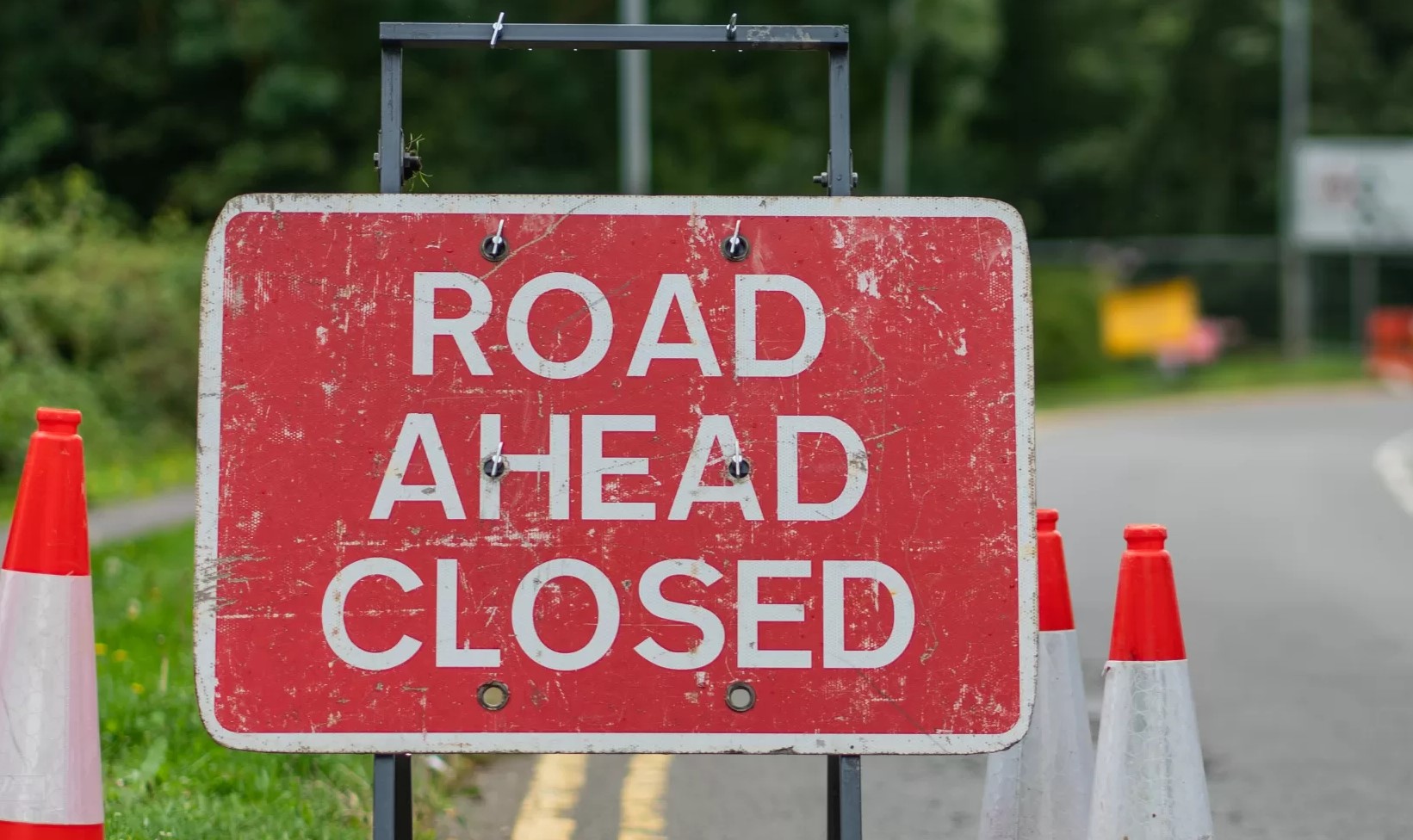
Ghana’s road network, already strained by rapid urbanization and inadequate maintenance, faces a coordinated assault from three largely unregulated sources: haphazardly constructed speed bumps erected by communities without oversight, utility companies that excavate roads and abandon them in dangerous conditions, and the increasing practice of blocking entire thoroughfares for private events without proper authorization.
The cumulative effect threatens not only vehicle longevity and driver safety but the efficiency of the nation’s economic arteries and the rule of law itself.
The situation in Fadama, a residential area near the residence of the National Chief Imam, exemplifies the problem. Recently constructed speed ramps in the locality have become so poorly designed and executed that commercial taxi drivers now actively avoid the area, redirecting passengers and deliberately forgoing fares rather than subject their vehicles to damage. What should be a traffic calming measure has instead become a commercial deterrent, fragmenting the transport network and creating de facto inaccessibility for residents who depend on public transport.
This is not an isolated incident. Across Accra and other urban centres, communities have appointed themselves road engineers, constructing ramps of varying heights, uneven surfaces, and dangerous angles without technical specifications, proper drainage considerations, or safety protocols. The result is widespread suspension damage, misaligned wheels, and the premature failure of vehicle components.
 The anarchy of self-help infrastructure
The proliferation of unregulated speed ramps reflects a governance vacuum. Communities, facing genuine traffic safety concerns in neighbourhoods where vehicles speed recklessly, have concluded that state institutions cannot or will not provide solutions. They have therefore taken matters into their own hands, constructing ramps with whatever materials are available and whatever design they believe will slow traffic.
The impulse is understandable. The execution is catastrophic.
Speed management is a legitimate governance function. Traffic calming measures, when properly designed, improve safety for pedestrians and residents. However, such measures must meet engineering standards that ensure they slow traffic without creating hazards. Ramp heights must be calibrated to vehicle suspension specifications. Surfaces must be smooth and well-drained to prevent water accumulation and structural failure. Transitions must be gradual to avoid suspension shock and component damage.
Ghana’s unregulated ramps meet none of these standards. Many are constructed at angles that damage low-clearance vehicles. Others are uneven, creating jolting impacts rather than smooth deceleration. Some lack proper drainage, creating potholes and water damage within weeks.
The Ghana Police Service and local Metropolitan, Municipal and District Assemblies have the authority and responsibility to regulate this activity. The Building and Road Research Institute can establish technical standards for speed ramps. District assemblies can issue guidelines specifying approved locations, dimensions, and construction methods. The police can enforce regulations by removing illegal structures and prosecuting violators.
This framework exists. Its implementation does not.
Utility companies: Destruction without restoration
A second, more systemic problem involves state-owned utility companies that excavate roads to install and maintain underground infrastructure but then abandon repair work in dangerous, incomplete conditions.
The Electricity Company of Ghana and Ghana Water Company Limited regularly must access underground cables and pipes. This work is necessary and important. However, the execution reveals little regard for road users or public safety.
When these companies complete underground work, they often simply replace excavated soil without proper compaction, leveling, or surface restoration. The result is roads that are worse after utility work than before. Uncompacted soil settles over time, creating depressions and potholes. Unleveled surfaces force vehicles into harsh impacts. Water collects in depression areas, accelerating deterioration.
More problematic is the duration of these projects. Excavation sites frequently remain open for weeks or months, blocking traffic lanes, creating congestion, and forcing vehicles into hazardous detours. The work appears to proceed without urgency or scheduling discipline. Projects that could be completed in days stretch into months, suggesting poor planning, inadequate personnel, or indifferent supervision.
The financial and social cost is substantial. Traffic congestion caused by road excavations increases fuel consumption, extends commute times, reduces productivity, and increases air pollution. Commercial vehicles lose revenue opportunities. Ambulances and emergency services face delays. The cumulative economic loss to the nation likely exceeds the cost of proper restoration.
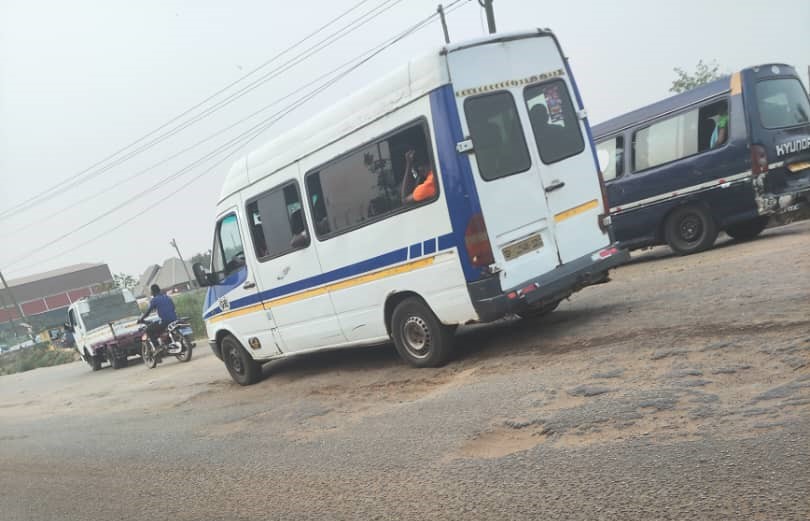 Current regulations require utility companies to restore roads to their pre-excavation condition. However, enforcement is minimal. No audit mechanism appears to verify that restorations meet specifications. No penalties exist for substandard work or extended project timelines. The companies operate with de facto immunity, treating public roads as their infrastructure without corresponding responsibility to restore them properly.
The Ministry of Roads and Highways, the Ghana Highway Authority, the Department of Urban Roads and district assemblies must establish strict enforcement protocols. Excavation permits should include completion deadlines with financial penalties for delays. Restoration work should be inspected by independent engineers before roads are reopened. Companies should be required to post performance bonds that are forfeited if restorations do not meet specifications.
The weekend road closure problem
A third dimension of road chaos involves the growing practice of closing public roads for private events without authorization from local Assemblies or competent authorities.
Funerals, weddings, naming ceremonies, and parties increasingly block entire roads, diverting traffic, creating congestion in surrounding areas, and disrupting commerce. Organizers block roads without obtaining permits, notifying authorities, or arranging traffic management. The practice has become so normalized that enforcement appears virtually nonexistent.
This reflects a troubling conflation of private and public space. Roads are public infrastructure built and maintained with taxpayer resources. Using them for private benefit without authorization is appropriation of public property. When practiced on a weekend or extended basis, it imposes costs on all other road users who must navigate around blockages or endure delays.
The problem is not the events themselves. Funerals and celebrations are important social functions. The problem is the unauthorized seizure of public space without regard for other citizens’ rights to use that infrastructure.
Local assemblies have authority to regulate this activity. Permit systems can be established allowing communities to request road closures for specific times and events, with conditions requiring organizers to arrange traffic management, notify authorities, and restore normal traffic flow within specified timeframes. Enforcement mechanisms can impose fines on organizers who block roads without permits. After the events, the organizers leave the canopies and other items there without removing them for thorough fares until they are very much relaxed before doing so.
This should not be controversial. Most organized nations manage this through straightforward permitting processes. Ghana’s challenge is not the concept but the implementation.
The systemic problem: Weak enforcement and fractured accountability
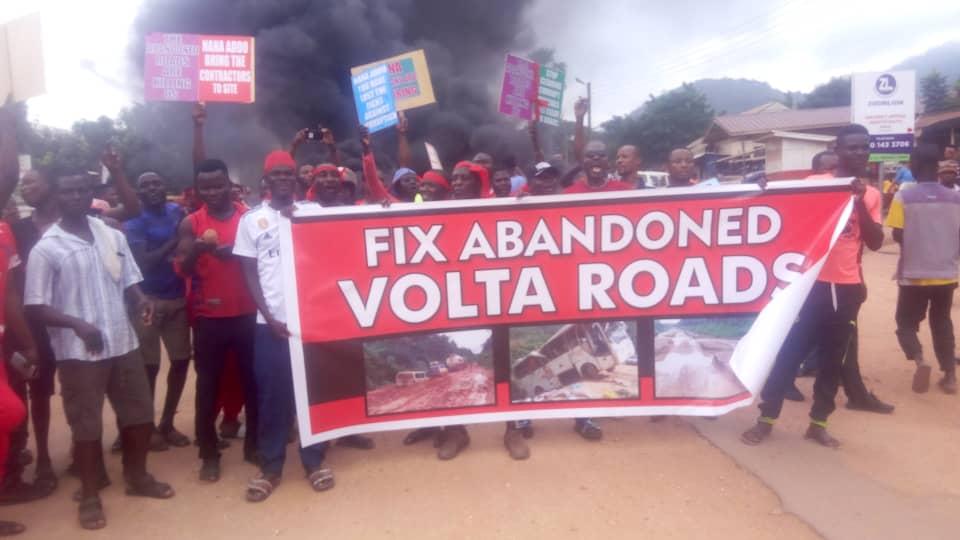 These three problems — unregulated speed ramps, negligent utility restoration, and unauthorized road closures — share a common root: inadequate enforcement of existing regulations and diffused accountability across multiple agencies.
The Ghana Police Service has traffic management authority but limited visible enforcement of road regulations. District assemblies have authority over local road use but often lack capacity or political will to regulate community activities. The Ministry of Roads and Highways establishes standards but struggles to enforce them across the sprawling road network. State-owned utility companies operate with minimal external oversight.
The result is a regulatory vacuum where various actors behave according to perceived self-interest rather than established rules. Communities install unauthorized ramps. Utility companies restore roads inadequately. Event organizers block public roads. Each operates knowing that enforcement is unlikely.
Addressing this requires integrated action across multiple institutions.
Required actions
The Ministry of Roads and Highways must establish clear technical standards for speed ramps, excavation procedures, and restoration requirements. The Ghana Police Service must deploy visible enforcement, removing illegal ramps and documenting violations. District assemblies must establish permit systems for road closures and utility work, with penalties for non-compliance.
Utility companies must face contractual requirements specifying restoration standards and project completion deadlines, with financial consequences for violations. Independent inspection protocols should verify compliance before roads are reopened.
Communities must be engaged in understanding why regulation serves their interests — that properly designed ramps are safer and less destructive than chaotic installations, that rapid utility restoration minimizes disruption, that authorized road closures provide predictability rather than random congestion.
Conclusion: From anarchy to order
Ghana’s road network is too important to remain subject to the whims of uncoordinated actors and the indifference of poorly supervised institutions. The nation’s economic competitiveness depends on functional transport infrastructure. Driver safety and vehicle longevity depend on properly maintained roads. The rule of law depends on consistent enforcement of established regulations.
The problems in Fadama and across Accra’s sprawling urban landscape are not mysterious or unsolvable. They reflect governance choices: whether to enforce existing authority or allow it to atrophy, whether to hold institutions accountable or tolerate negligence, whether to regulate public space or cede it to self-appointed authorities.
Ghana’s leaders must choose order. The road network cannot wait much longer.
Community-led solutions for road infrastructure: Practical actions that drive change
Communities don’t need to wait for government action alone. While systemic reforms are essential, residents and local organizations can implement concrete strategies immediately to address speed ramps, utility damage, and unauthorized road closures.
Establishing legitimate speed ramp governance
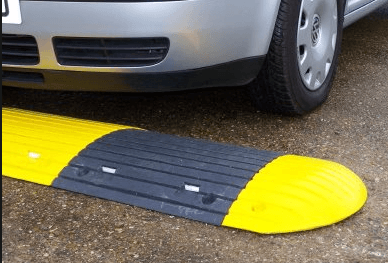 Instead of constructing ramps haphazardly, communities should formalize the process through their unit committees and assemblies. The first step is conducting a traffic safety audit identifying genuine hazard zones where pedestrians are at risk or vehicles consistently exceed safe speeds. This audit should be documented with photographs, accident reports, and resident testimonies.
Armed with this data, community leaders should petition the District Assembly in writing, requesting formal approval for traffic calming measures. This petition should specify exact locations, include engineering recommendations (height specifications, surface materials, drainage plans), and propose a timeline for construction. The petition should also identify a community member or committee responsible for maintenance.
Communities that obtain formal approval gain several advantages. First, they can demand that the assembly provide technical guidance or connect them with engineers from the Building and Road Research Institute. Second, they receive legal protection if the ramp meets approved specifications. Third, they create accountability structures for maintenance rather than abandonment.
Once approved, communities should source materials properly rather than using whatever is available. Concrete ramps are more durable than poorly compacted earth. If concrete is unaffordable, communities can partner with assembly resources or appeal to local businesses for sponsorship. The key is constructing once, correctly, rather than repeatedly patching failed installations.
Creating community road maintenance committees
Communities should establish formal road maintenance committees with specific responsibilities for monitoring road conditions, documenting damage, and coordinating repairs. These committees should include representatives from traders, taxi associations, residents, and local government.
This committee should conduct monthly road audits, photographing and documenting deterioration, potholes, drainage failures, and utility damage. Documentation should be systematic — specific locations, dates, measurements, and descriptions. This creates an evidence record that individual complaints lack.
The committee should then present this documentation to the District Assembly and relevant utility companies monthly, with specific demands for repair timelines. Written communication creates accountability that informal complaints do not. Regular, organized pressure from documented evidence is far more effective than sporadic protests.
Holding utility companies accountable
Communities can demand that utility companies post project schedules and completion deadlines before beginning excavation. Before work begins, residents should photograph existing road conditions. After utility work concludes, the same location should be photographed to verify that restoration met standards.
Communities should establish a transparent process: if utility restoration is inadequate, the community formally requests that the utility company provide a follow-up restoration schedule within seven days. If the company fails to comply, residents should document this and escalate complaints to the Ministry of Roads and Highways, the Public Utilities Regulatory Commission, and local media simultaneously.
Utility companies are far more responsive when complaints are public, documented, and escalated beyond line management. Creating public accountability — through media attention or regulatory complaints — motivates performance far more effectively than informal complaints.
Communities can also demand that utility companies provide community liaisons who communicate project timelines and coordinate traffic management during excavation. This formalizes a relationship that currently exists only as an imposition.
Regulating private road closures
Community unit committees should establish a simple but formal process for requesting road closures. Any person or organization wanting to close a road for an event must submit a written request at least two weeks in advance, specifying the event, duration, expected attendance, and proposed traffic management measures.
The committee evaluates requests against community needs. Requests should be approved or denied in writing. If approved, organizers must provide proof of traffic management (barriers, signage, security personnel) and must restore normal traffic flow by the agreed deadline.
This process is not punitive. It legitimizes community use while creating order. Most organizers will comply with a clear process. Those who proceed without approval face public disapproval and potential police action that communities can request by showing the violation of the established process.
Communities can also coordinate with the Ghana Police Service to patrol during high-risk weekends when multiple events commonly occur. Police presence deters unauthorized closures far more effectively than after-the-fact complaints.
Building technical capacity within communities
Many communities lack basic knowledge about road engineering or regulatory processes. Communities should invest in training. The Building and Road Research Institute, district assemblies, and NGOs focused on urban development can conduct workshops teaching communities about proper ramp specifications, drainage principles, and restoration standards.
This training should empower community members to evaluate whether installed ramps meet safety standards and whether utility restoration work is adequate. Technical knowledge transforms communities from passive victims into informed advocates.
Creating coordination with taxi and transport associations
Taxi drivers and transport operators have direct economic interest in road quality. Communities should engage these associations formally, enlisting them as partners in road maintenance advocacy. Transport associations can collectively refuse to use roads closed without authorization, creating economic pressure on organizers to seek formal approval.
Transport associations can also document vehicle damage caused by poorly constructed ramps or utility excavations, creating evidence of economic harm that strengthens community complaints to authorities.
Engaging local media and civil society
Communities should develop relationships with local media outlets, radio stations, and civil society organizations focused on infrastructure. When utility companies fail to restore roads adequately or when unauthorized road closures persist, communities should publicize the issue.
Media attention creates accountability that administrative complaints alone lack. When stories feature specific locations, named individuals responsible, and documented evidence, authorities become responsive. Civil society organizations can amplify community concerns and provide technical support for advocacy.
Documenting everything systematically
The single most effective tool communities possess is systematic documentation. Every road problem should be photographed with dates, location details, and descriptions. Complaints should be made in writing with copies retained. Responses from authorities should be documented, including who received the complaint, when, and what action was promised.
This documentation creates an evidence trail. When communities can show that they reported a problem on specific dates and received no response, this evidence becomes powerful leverage for action. It also protects communities from claims that issues don’t exist or that communities are exaggerating.
Building relationships with district assembly officials
Rather than confronting assemblies, communities should develop collaborative relationships. Invite assembly representatives to community meetings. Present documented evidence of problems. Ask for their guidance on processes for addressing issues. Make assembly officials partners in solutions rather than adversaries.
When officials understand that communities have organized, documented evidence and are pursuing legitimate channels, they become more responsive. Assemblies often fail to act not from malice but from competing priorities and limited information. Communities that provide clear information and sustained attention rise on the priority list.
Establishing quarterly community-government meetings
Communities should propose formal quarterly meetings between community leadership, unit committees, assembly representatives, police, and utility company officials. These meetings should have fixed agendas: reviewing documented road problems, discussing solutions, establishing timelines for action, and monitoring progress on previously identified issues.
Formalized accountability structures are far more effective than informal complaints. When officials know they will be questioned about specific issues at a scheduled meeting, they prioritize action.
Creating community funding mechanisms
For issues where communities have formal assembly approval, residents and businesses can contribute funds for proper repairs. Some communities establish small levies or organize fundraising events. When communities demonstrate financial commitment to solutions, they gain credibility with authorities and contractors.
This should never replace government responsibility, but it can accelerate solutions where bureaucratic processes move slowly.
The multiplier effect of organized communities
The fundamental insight is that unorganized communities face problems individually and remain powerless. Organized communities with documented evidence, formal processes, and coordinated advocacy become impossible for authorities to ignore.
The road problems in Fadama and across Accra persist not because solutions are technically impossible but because problems have been treated as individual complaints rather than systemic issues requiring coordinated response. Communities that change this dynamic — by organizing, documenting, and maintaining sustained, coordinated pressure — invariably achieve results.
This does not replace the need for government enforcement and regulation. But it recognizes that communities themselves possess significant power to drive change when they organize deliberately and strategically.
By Innocent Samuel Appiah