
The Rev. Robin Hood’s fulfilled promise and the achingly slow wheels of justice
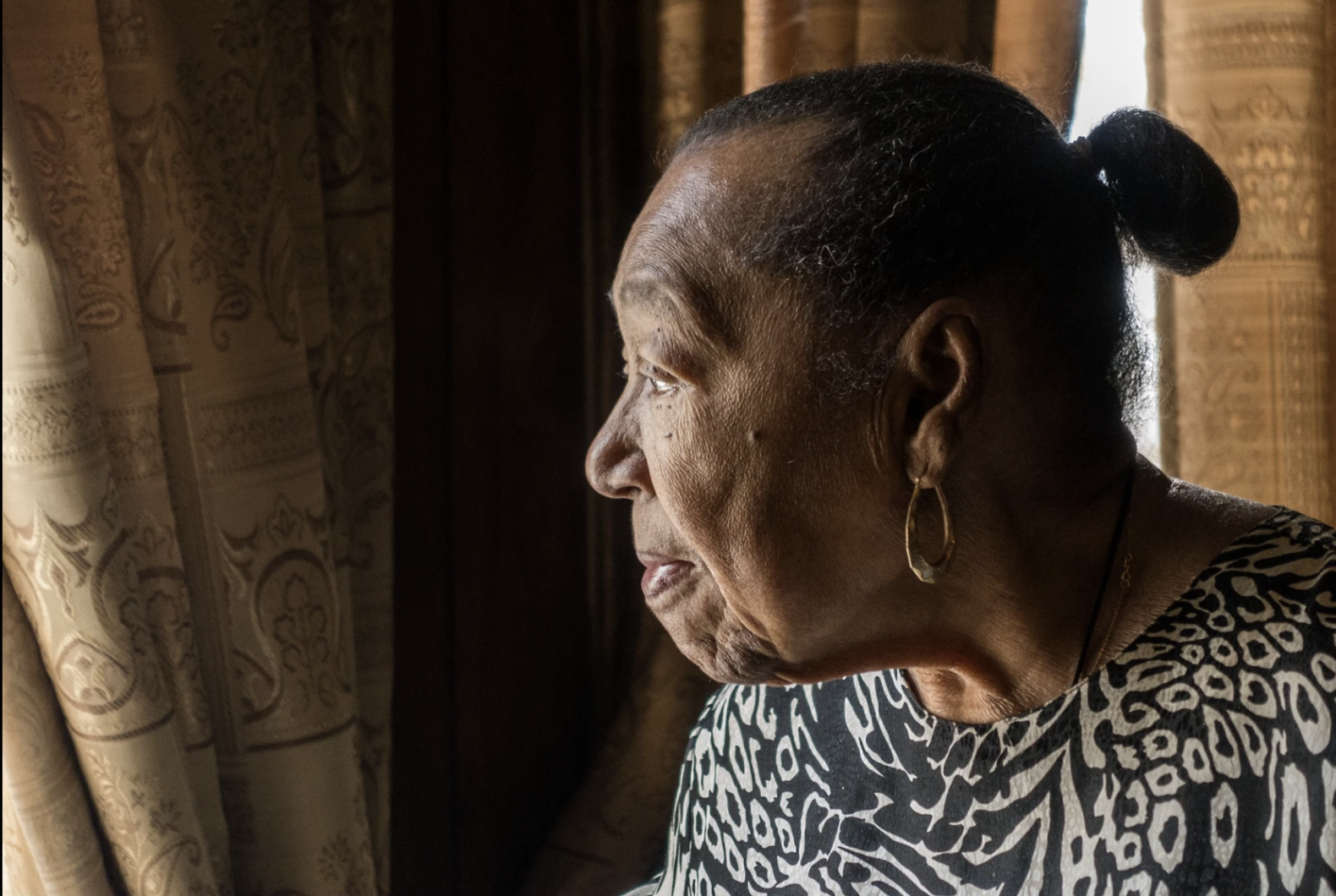
As she lay on her deathbed in June 2016, just hours before she drew the final breath of her courageous life, Lillie Pearl Williams heard a familiar voice.
It was that of her nephew, the Rev. Robin Hood, a longtime pastor and community organizer on Chicago’s South and West Sides.
Amidst his agony and anguish, he made a promise to his aunt. Along with Ethel Winters, one of his mother’s six sisters, she had purchased a two story greystone home in the North Lawndale neighborhood on the city’s West Side in the early 1970s. The pair had moved north from Mississippi to seek better opportunities.
“I will testify the day Mark Diamond and Cynthia Wallace are sentenced,” he told Williams.
As they had done to more than 120 black seniors across the city, Diamond and Wallace had worked with others to dupe Williams into signing a reverse mortgage. The scam was chilling in its cynicism in preying on some of Chicago’s most vulnerable members.
Wallace, who is African-American, would go door to door in black neighborhoods looking for seniors Diamond and his co-schemers had identified as worthy targets due to the equity in their homes. Upon meeting the people who often owned their homes outright, she would tout the benefits of a government program that she said would provide needed repairs free of charge.
In a 2024 plea agreement the government wrote that Diamond paid Wallace a salary, a commission for each homeowner she successfully solicited, and allowed her to live rent-free in a home that Diamond owned at 8036 S. Princeton in Chicago.
Diamond typically came the following day.
With Williams, he took her to his office in another part of the city and did not provide required disclosures. He pressured Williams, then in her 80s, to sign the paperwork turning the proceeds over to him before doing minimal repairs on the home that was the family’s gathering place, emotional heart, and centerpiece of its financial legacy.
“It’s all we’ve got,” Walter Williams, one of Lillie Williams’ three children and Hood’s cousin, told me in 2015 for a story I wrote for The Chicago Reporter.
Home ownership rates among African-Americans have long trailed those of other race groups. The ability to pass on a house is a critical element in building generational wealth in families and communities.
Hood had introduced me to reverse mortgages about a week earlier and a little more than a decade after we had first met while I was working on a story for Catalyst Magazine about the reopening of Lindblom Academy in the city’s Englewood neighborhood. Then in our late 30s and early 40s, we had gone on to have hundreds of conversations during the course of that project and stories I did for the Reporter about fatal police shootings and long-term youth unemployment.
I explained in the Reporter story that reverse mortgages are a tool for senior citizens to convert a portion of their home’s value into cash. The loan doesn’t have to be repaid until the person moves out of the house or dies. If family members want to keep the house, they have to pay off the debt.
In January 2015 Hood mentioned his aunt’s predicament of being on the verge of losing her home due to being unable to pay required insurance costs connected to the reverse mortgage. A quick public records search revealed that Diamond’s misdeeds had garnered local and national media coverage. He had been sued close to 100 times and subject to a consent decree by the Federal Trade Commission. Then-Attorney General Lisa Madigan had vowed to put him out of business.
Yet he continued to operate with impunity.
Some of the allegations in the court records were skin crawling in their cruelty and bitter in their irony. I wrote earlier this year for the Sun-Times about Lillie Hopson, a blind woman who ended up paying rent to Diamond in the house she had owned, and about Clyde Ross, a major figure in the Contract Buyer’s League that fought for residents’ housing rights in the 1960s.
Diamond cheated Ross after he wanted to make his home accessible for his son Tim Ross, a disabled Marine who was injured in the Iraq War, according to testimony in Cook County court. After taking all of the money from the mortgage for repairs to outfit the bathroom for Tim Ross, a wheelchair user who did not have the use of his right arm, Diamond did such shoddy work that the veteran risked further injury each time he used the toilet or took a shower.
In the living room of her imperiled home, Williams pushed through any shame or embarrassment she might have felt and told my brother Jon, an award-winning photographer, and me what had happened.
We wrote the story. Other outlets later covered the issue.
The FBI raided Diamond’s office in March, but not before Hood had helped save his life. Two grandsons of one of his victims wanted to kill the predator, but heeded Hood’s impassioned plea that they not ruin their lives in ending Diamond’s.
He also printed out copies of the article and distributed it in the community. Shortly after his release from being arrested, Diamond went back into the neighborhood in search of fresh victims. But this time he spoke with an elderly woman who had read the article. She listened to and declined the pitch before calling authorities.
In August 2015 state legislation proposed by then-State Sen. Jacqueline Collins was passed, and in January 2016 Cook County Judge David Atkins ordered Diamond to compensate five of his victims, quit operating his business while his case wound through the courts and pay a fine of $340,000.
Federal charges came in against Diamond, Wallace, and loan originators Gary Bohn and Matthew Fefferman. Still, criminal accountability remained elusive until this past January, 10 long years after we wrote the first story.
Much had happened since then.
Rev. Hood’s has gone from dark to white as he continues to shoulder the pain of his family and the community. In 2023, his grandson Rashaun was shot and killed. The murder added to the losses of his brother, sisters, uncle and two cousins, all of whom were killed in North Lawndale.
In addition to Williams, other victims have died, as have relatives like Barbara Herron, who told CBS News in 2017 that she wanted to spend the rest of her days in the family home. Hood believes the stress of the disruption caused by the reverse mortgage shortened her life.
This January Diamond was sentenced to 17 years in federal prison and ordered by Judge Wilmer Valderrama to pay $2.7 million in restitution. In October Fefferman and Bohn received combined prison sentences and financial punishment of four years and about $850,000.
Wallace got a nearly four-year prison sentence and $300,000 in restitution.
On one level the punishment seems woefully inadequate compared with the brutal damage Diamond and his cronies inflicted. The number of seniors who did not live to see those who had victimized them receive their incomplete justice and their families who were unable to salvage their treasured homes filled me with disappointment.
Yet at a time when our democracy and truth are buckling under sustained assault and when executive abuse is by the nation’s highest courts under the doctrine of presumptive immunity, other feelings rose within me.
On that day, accountability had finally come to the woman who traded on her skin color and the knowledge of people’s frailty and vulnerability to abet a financial terrorist who extracted millions of dollars from the community and disrupted far too many lives. A woman who had apologized to her victims in front of the judge who sentenced her but tried to hide her face as she emerged from his courtroom.
On that day, my former source, longtime teacher, and lifelong friend found within himself the strength to rise, speak and bear witness. And in so doing he fulfilled the promise he had made nearly a decade ago to his dying aunt in the home she had bought with her sister and that, due to her courage and his persistence, remains in the family today.
That had to matter, too.
By Jeff Kelly Lowenstein