
Ghana inflation falls to four-year low of 8%, driven by strong food supply and fiscal stability
 Ghana’s year-on-year inflation rate dropped sharply to 8.0 per cent in October 2025, down from 9.4 per cent in September, marking the lowest rate in four years.
Data from the Ghana Statistical Service (GSS) showed that the fall is the tenth consecutive month of decline, confirming that Ghana’s macroeconomic environment is stabilizing after a turbulent 2024.
The Government Statistician, Dr. Alhassan Iddrisu, said the results demonstrated that inflation was “not only moderating but stabilizing.”
He added that for the first time this year, month-on-month inflation was negative (-0.4%), meaning that the overall price level of goods and services actually declined between September and October.
“The October numbers confirm that Ghana’s inflation trajectory is firmly downward, driven by improved food supply, stable exchange rates, and sustained fiscal management,” Dr. Iddrisu said.
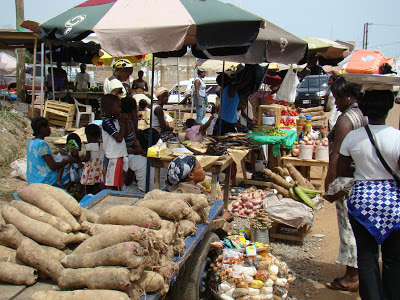
The GSS data showed that food inflation dropped to 9.5 percent, from 11.0 percent in September, thanks to good local harvests and improved supply in major markets.
Non-food inflation also declined to 6.9 percent from 8.2 percent, signalling easing costs in housing, clothing, and transport.
Goods inflation fell to 9.3 per cent, while services inflation eased slightly to 4.6 per cent, giving consumers welcome relief on basic household goods.
“The biggest price relief is being felt by households that spend the most on tangible goods,” Dr. Iddrisu emphasized.
Inflation rates varied widely across regions. The North East Region recorded the highest inflation at 17.3 percent, while Bono East Region recorded the lowest at just 1.1 percent, showing how differences in food production, market access, and transportation costs affect regional price levels.
Dr. Iddrisu advised policymakers to sustain these gains through fiscal discipline and food system investments.
He stressed that government focus on irrigation, storage, and efficient distribution networks would prevent price shocks in future.
“Knowing that the cost of tomorrow won’t overwhelm the efforts of today is crucial. We must make stability a habit,” he said.
The GSS said Ghana’s inflation progress demonstrated the importance of combining prudent fiscal management with supportive monetary policy to anchor stability.
Source: GNA